The River Remembered My Name
By Benjamin Munyao David
I was born in Musoka, Machakos County, into a world where the earth seemed to know our names. I belonged to the Mbaa Muli lineage, and although the wider world might have regarded our village as a remote place, to me it was the centre of everything. There were no towering buildings interrupting the horizon, no endless traffic drowning the songs of birds, no machines separating us from the rhythm of the seasons.
There was the soil beneath our bare feet, the trees standing patiently against the sky, the distant calls of animals, the smoke rising from evening cooking fires, and the great African sky opening above us like a book without an ending. We did not possess much by the standards of a rapidly changing world, but we possessed something precious: a profound closeness to the land. Nature was not a photograph hanging behind our lives. It was the foundation upon which our lives stood.
As a child, I learned the language of the seasons without ever being taught its grammar. I knew the smell of earth waiting for rain. I knew how the landscape changed when the clouds finally gathered after days of heat. I knew how adults watched the sky with a seriousness children could feel even when they could not understand it. Rain meant more than wet ground. It meant crops, food, animals, water and another season of possibility. The earth spoke through the colour of its grass, the condition of its soil and the strength of its trees. We listened because our
survival depended upon listening.
And then there was Musoka River.
I remember the river not as a geographical feature, but as a companion from my childhood. It sang. Its water moved around stones with a voice that seemed to belong to the landscape itself. Sunlight danced upon its surface.
Leaves travelled slowly along its current. Birds came to its banks, animals depended upon it, and people built portions of their lives around its existence. To us children, the river seemed eternal. We could not imagine a future in which its voice might become weaker. We believed, with the unquestioning confidence of childhood, that the things which had always been there would always remain.
That belief is one of the beautiful illusions of childhood.
Years have passed, and memory has become a different kind of teacher. When I look back at Musoka, I realise that I was growing up inside an environmental story long before I knew the words climate change.
The signs were written quietly across the landscape. Seasons became less predictable. Dry periods could stretch longer. Rain could arrive differently from the way people expected. The land could appear increasingly tired.
What once seemed permanent began revealing its vulnerability. A river can diminish slowly enough that people adjust their expectations before they realise something precious has disappeared.
This is how environmental destruction often enters human lives — not always with a dramatic announcement, but quietly, almost invisibly. A tree disappears. A stream becomes shallow. A harvest becomes smaller. A family walks farther for water. A child begins carrying responsibilities that once belonged to adults. One small change follows another until an entire way of life has shifted.
For communities living close to nature, climate change is therefore not an argument confined to scientific conferences or distant policy documents. It is personal. It can be the farmer standing in a field, looking at a sky that refuses to answer. It can be a mother measuring water carefully because she does not know when more will come. It can be a family watching a livelihood weaken season after season. It can be poverty becoming heavier because the natural systems upon which people depend have become less reliable.
And this is where the environment becomes inseparable from social justice.
A damaged ecosystem does not merely lose trees, water or fertile soil. It can lose livelihoods, opportunities, education and hope. When the environment changes, society changes with it. The poorest communities are often the least able to build walls against environmental hardship, purchase alternative resources or simply move away from danger. The climate crisis therefore asks us not only what kind of planet we are creating, but also what kind of human society we are creating upon it.
My childhood taught me something that modern life sometimes makes difficult to remember:
We do not stand above nature. We stand within it.
The river did not belong to us simply because we depended upon it. The soil did not exist merely to produce for us. The trees were not valuable only when they could be converted into timber. Their existence was part of a larger balance in which human beings were participants, not masters. Our ancestors may not have used the scientific vocabulary we use today, but many understood a principle that remains fundamental:
You cannot continually take from the source of your life without eventually facing the consequences.
Today, humanity possesses extraordinary knowledge. We can measure atmospheric changes, monitor forests from space, predict weather patterns and document the accelerating pressures placed upon ecosystems. Yet knowledge alone is not wisdom.
Wisdom begins when knowledge changes how we live.
That is why I return to my childhood whenever I think about the future.
I remember Musoka River before I understood what it meant to lose something. I remember the landscape as a place of abundance — not necessarily material wealth, but abundance of connection. I remember that a river could be a meeting place, a source of life, a teacher and a memory. Those memories now feel like both gifts and responsibilities.
I write because memory can become a witness.
I write for the rivers whose names may disappear from maps. I write for the trees that children may one day know only from photographs. I write for farmers whose relationship with the seasons is becoming increasingly uncertain.
I write for communities whose environmental struggles are rarely heard beyond their villages. And I write for children yet unborn, because they will inherit the consequences of choices they never had the opportunity to make.
Perhaps the greatest mistake of our generation would be to think that saving the environment means saving something separate from ourselves.
We are not rescuers standing outside the burning house. We are inhabitants of that house.
When the river suffers, we suffer. When the soil dies, our future becomes poorer. When forests disappear, something within the human story disappears with them.
I was once a boy in Musoka who listened to a river sing without knowing that one day I would fear its silence. That river gave me more than water. It gave me a way of seeing the world. It taught me that everything is connected:
people to land
land to water
water to life
life to responsibility
Now, whenever I remember that childhood river, I ask myself a question that reaches beyond Musoka, beyond Kenya, beyond Africa:
What will we leave behind when our own footprints finally disappear?
Perhaps the true measure of our generation will not be the cities we built, the wealth we accumulated, or the technology we invented, but whether we had the wisdom to protect the things we could never recreate.
“I write for the river I remember, for the earth that raised me, and for the unborn child who deserves to inherit not my memories of nature, but nature itself.”
Ben Munyao
Words copyright to Benjamin Munyao David
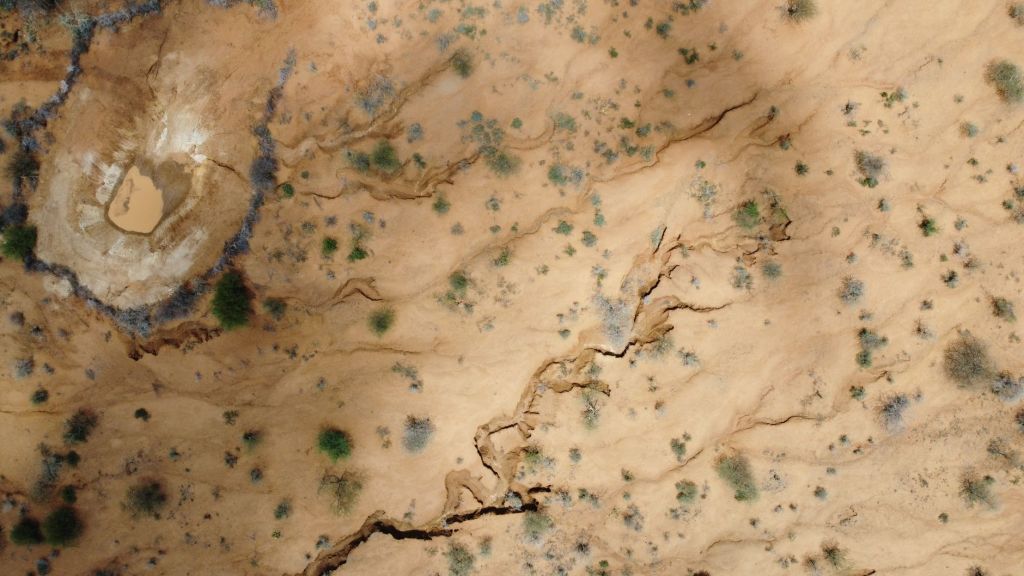
Photo by ATHUMAN KOMORA GARISSE on Pexels.com


Leave a Reply