
The return of ex-president Joseph Kabila and the birth of the FRN
How an old president created a new war
Elijah Astute reports from Uganda
For almost four years, the war in eastern Democratic Republic of Congo has had a familiar script. The M23 rebels advance, Goma trembles, Kinshasa accuses Rwanda, Kigali denies, civilians flee, and diplomats call for dialogue.
On 12 October 2026, that script was rewritten.
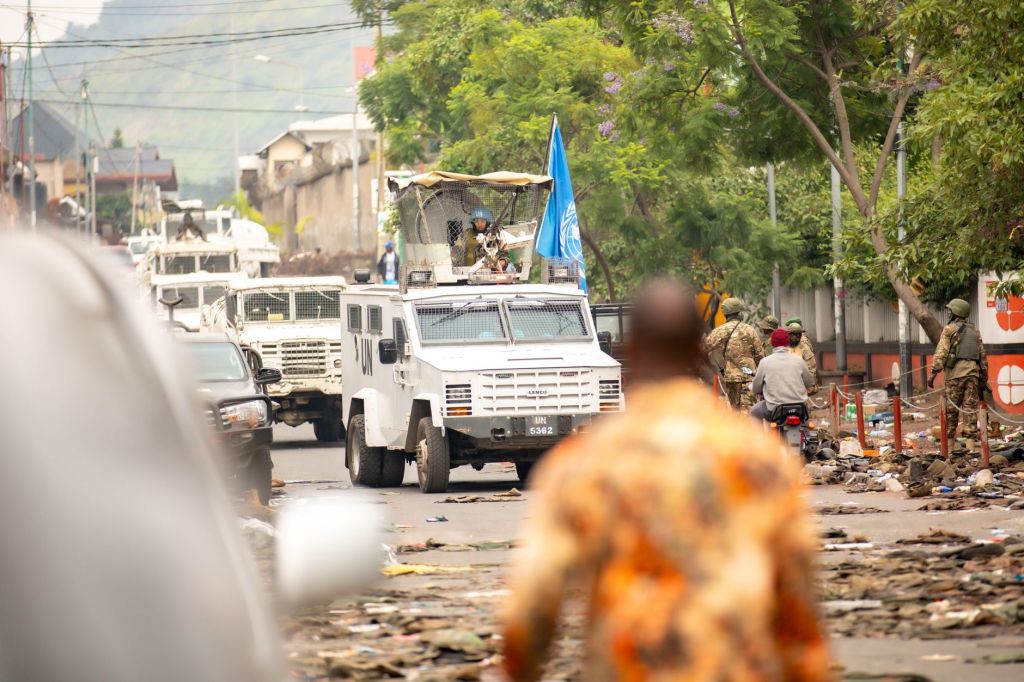
In Goma, the capital of North Kivu province under rebel control since January 2025, former President Joseph Kabila appeared before cameras to announce the creation of a new political military movement: the Front pour la Refondation de la Nation (FRN) [Front to Refound the Nation].
The announcement is the most significant shake-up of the Congolese rebellion in a decade.
From M23 to AFC to FRN
To understand the FRN, you need to understand its layers.
The core fighting force remains the March 23 Movement (M23), a Tutsi-led insurgency that first emerged in 2012 and re-emerged in late 2021, claiming the government failed to honor previous peace deals.
Around M23, a political umbrella was built: the Alliance Fleuve Congo (AFC), led by former electoral chief Corneille Nangaa. The AFC gave M23 politicians, a flag, and a narrative that this was more than a regional mutiny.
The FRN now replaces and absorbs both. According to the declaration made in Goma, it takes over all AFC-M23 political and military structures, including existing commitments to regional peace processes such as the Doha negotiations.
The leadership structure is telling. Kabila becomes President of the FRN. Nangaa and M23 political leader Bertrand Bisimwa become Vice-Presidents. The old guard stays, but with a new figurehead at the top.
Joseph Kabila is not a marginal rebel. He ruled Congo from 2001, after the assassination of his father Laurent-Désiré Kabila, until 2019. He oversaw the end of the Second Congo War, a long transition, and then a reluctant handover of power to Félix Tshisekedi in what was Congo’s first peaceful transfer of power.
Since then, his relationship with Tshisekedi collapsed. In September 2025, a military court in Kinshasa sentenced Kabila to death in absentia for treason, war crimes and supporting the M23 insurgency; charges he rejected as politically motivated.
His return as rebel leader does two things strategically.
First, as noted by Reuters and diplomatic sources, it gives the rebellion a highly prominent Congolese face. For years, UN experts and Western governments have accused Rwanda of backing M23. Rwanda denies direct support but acknowledges security coordination. By placing a former head of state and Katangese figure at its helm, the rebellion can rebrand itself from a “Rwandan proxy” to a national resistance movement.
Second, it comes at a moment of constitutional anxiety in Kinshasa. President Tshisekedi is in his second five-year term, which ends in 2028. The Congolese constitution limits presidents to two terms. For several months, members of his ruling coalition have openly floated the idea of amending or replacing the constitution, a move widely seen as opening the door to a third term. The FRN explicitly accuses Tshisekedi of tyranny, corruption and authoritarian drift, and calls for resistance by all means, including force.
In other words, as Kinshasa debates extending power, Goma declares it will end it.
Despite the new name and new president, analysts warn that much remains the same.
The roots of the conflict still stretch back to the aftermath of the 1994 Rwandan genocide, the collapse of Mobutu’s Zaire, and decades of competition for land, identity and mineral wealth in the Kivu provinces. Eastern Congo sits on vast deposits of cobalt, coltan, gold and tin minerals critical to the global economy.
The humanitarian cost also remains unchanged. More than 7 million people are displaced across eastern Congo, according to UN estimates. Goma, a city of over a million people living under the shadow of the active Nyiragongo volcano and next to Lake Kivu, continues to function as a rebel capital — with markets open, but with no state administration.
And the central question remains unanswered:
Can guns refound a nation?
The FRN says it wants dialogue, but on its own terms. It says it wants to end the war, but by threatening more war. It says it wants to save the Congo, but from outside the Congo’s institutions.
History in Congo does not repeat itself. It changes uniforms and announces itself again from Goma.
Words copyright to Elijah Astute
If you feel called to support Congolese refugees in Uganda, here is one opportunity to do so:
https://gofund.me/e06cee6af
Sources:
Photo by Safi Erneste on Pexels.com


Leave a Reply