The story of a mother, a dying herd, and the little boy who refused to disappear
By Benjamin Munyao
There are places in Kenya where the sky is so immense that a person can spend an entire lifetime beneath it and still feel that the heavens have forgotten his name. In Turkana, the horizon stretches like an unfinished sentence, and the land wears the colour of old fire. The wind crosses the plains without finding a tree to hold it, while the sun rises each morning with the terrible certainty of something that has never known hunger. For generations, the people of this beautiful and unforgiving country had understood the language of drought. They knew how to follow the movements of their goats and camels, how to read the faintest green upon a distant hillside, how to recognise the promise of water in places where a stranger would see only stones. Their animals were not merely animals; they were food, wealth, school fees, marriage, memory and tomorrow. Milk carried childhood through the difficult seasons, and a healthy herd meant that somewhere beyond today’s hardship there was still a future waiting.
But there came a season when even the wisdom inherited from grandfathers seemed too small for what had arrived. The rains failed. The grass disappeared. The wells became difficult to reach. Goats became little more than ribs beneath stretched skin, and cattle fell upon the dust from which they had once risen. The milk that had nourished children vanished from the cooking pots, and hunger entered the homes quietly, almost politely, before revealing the terrible weight of its presence.
It did not arrive as a storm. It arrived as an absence — the absence of rain, the absence of pasture, the absence of milk, the absence of certainty — and slowly it began counting the children.
Among those families was a young mother named Akal Longor. She was only twenty years old, but drought had already placed years upon her face. Like generations before her, her life had been woven around livestock and movement, around the ancient understanding that survival sometimes means knowing when to leave one place and search for another. Her family’s animals had once given them a measure of independence, a quiet dignity that did not need to be explained to outsiders. A goat could become supper. Milk could become breakfast. A healthy herd could pay school fees and carry a family through an uncertain season.
But drought does not negotiate with human plans. It takes slowly and then, when people have grown accustomed to losing a little, it takes everything. By the worst months, Akal’s family had lost most of its livestock. The animals that remained were too weak to provide enough milk. The old rhythm of pastoral life had begun to break apart, and with it came a frightening question that no mother should have to ask: what happens when there is nothing left to feed the children?
Yet inside that broken rhythm was a little boy named Ekalale, about a year old, small for his age and weakened by severe acute malnutrition. His body seemed almost too delicate for the enormous landscape surrounding him, like a tiny candle burning beneath an endless sky.
And still, somehow, there remained within him something that drought had not managed to take. A smile. A small and stubborn light. When his mother placed him down, he tried to move, and when he looked toward the people around him, there was still curiosity in his eyes. He did not understand the language of famine. He did not know what livestock loss meant. He did not understand statistics, emergency declarations or humanitarian reports. He knew his mother’s arms. He knew her voice. He knew the warmth of home. And perhaps, without knowing it, he carried the oldest human instinct of all — the instinct to remain alive.
His mother eventually brought him to Kakwanyang Dispensary, where humanitarian health workers were reaching remote communities affected by the crisis. It was not a magnificent building rising above the landscape like a monument. It was simply a place where people arrived carrying the fragile evidence of their lives. Mothers carried children. Children carried hunger. Health workers carried medicine, nutritional support, experience and the belief that sometimes saving a life begins with something as ordinary as paying attention.
Ekalale became one of the children whose recovery was monitored. There was nothing theatrical about the process. There were no miraculous lights descending from the heavens, no dramatic music, no single heroic moment in which suffering disappeared. There was weighing, examining, feeding, treating, returning and waiting. There were hands measuring the small body of a child and people watching closely for signs that he was becoming stronger.
This is often what humanitarian work looks like when the cameras are gone: quiet people performing necessary acts in difficult places, repeating them day after day because a life depends upon their persistence.
Outside the dispensary, Turkana remained vast and harsh. The drought had stripped the landscape until the land itself appeared skeletal. Across northern Kenya, livestock losses had destroyed livelihoods, while acute malnutrition threatened children who had little protection from the crisis.
Hunger was not merely the absence of food; it transformed the architecture of everyday life. It changed how far a woman had to walk for water. It changed whether a child could go to school. It changed what a family considered a meal. It changed how long a mother could remain awake at night listening to the breathing of a child.
There were children walking long distances carrying water containers, families searching for whatever sources remained available, and mothers spending entire days moving between the necessities of survival. Morning became a search for water. Afternoon became a search for food. Evening became a prayer that the child would sleep peacefully rather than cry from hunger. The cruelty of drought was not simply that it made life difficult; it turned every ordinary necessity into a journey.
Yet this is not a story about a country that abandoned its people. It is a story about what happens when human beings decide that another human being must not be left alone in the desert.
Far away from the photographs, statistics and international reports, people were moving toward the suffering. Health workers travelled to remote settlements. Humanitarian organisations delivered nutritional assistance, water and other forms of emergency support. Communities shared what they could. Government agencies and aid organisations worked within an enormous crisis that no single institution could solve.
They could not command the clouds to open. They could not restore every dead animal. They could not erase the poverty and vulnerability that had made drought so devastating. But they could stand between a vulnerable family and the worst possible outcome. That distinction matters.
Humanitarianism does not always look like victory. Sometimes it looks like postponing death long enough for life to find another road. Sometimes it looks like a packet of therapeutic food placed into a mother’s hands. Sometimes it looks like a health worker travelling for hours to reach a child who might otherwise never be seen. Sometimes it looks like clean water arriving where women and children have spent years walking for it. And sometimes it looks like a little boy who has become dangerously weak beginning, slowly, to regain the strength to stand.
That is where Ekalale’s story becomes larger than Ekalale.
A child recovering from malnutrition is never merely a number on a humanitarian report. He is someone’s son. Someone has imagined his future. Someone has watched him sleep. Someone has wondered what his first day at school will look like, what kind of man he might become, whose hand he might one day hold, what laughter might sound like when it comes from his own children.
Perhaps Akal imagined him growing tall enough to follow animals across the plains. Perhaps she imagined him becoming a teacher, a health worker, a driver or simply a good father. Perhaps she had never dared to imagine anything so far ahead. Perhaps, during the worst days, her greatest dream was smaller and more immediate: that he would still be alive tomorrow morning.
There are moments in human history when hope becomes so small that it can fit inside a single word. For Akal, that word may have been tomorrow.
Tomorrow meant another visit to the health centre. Tomorrow meant another attempt to feed her child. Tomorrow meant another search for water. Tomorrow meant believing that the fragile body in her arms could become stronger. Tomorrow meant refusing to allow drought to write the final sentence.
There is a kind of courage that the world rarely photographs because it happens in ordinary places, behind ordinary doors, inside families whose names may never appear in newspapers. It belongs to mothers who rise before dawn because their children are hungry. It belongs to women who walk for water while carrying another child on their backs. It belongs to fathers who watch their herds disappear and still rise the following morning. It belongs to health workers who travel through difficult terrain because someone in a distant settlement needs treatment, nutrition, vaccination or simply the reassurance that they have not been forgotten. It belongs to communities that share what little remains when there is barely enough for themselves.
That courage lived in Turkana.
And perhaps this is why humanitarian stories should never be written merely to make people cry. They should make people see. See the person behind the number. See the mother behind the statistics. See the child behind the phrase severe acute malnutrition. See the village behind the word drought. See the human being behind the photograph.
A crisis becomes dangerous not only when suffering increases, but when people elsewhere become accustomed to hearing about it. The greatest tragedy is sometimes not that people suffer, but that their suffering becomes ordinary to everyone who is far enough away from it.
Ekalale’s story refuses that distance. His small body reminds us that every statistic has a heartbeat. Every emergency has a mother waiting beside a child. Every drought has families who remember the sound of rain. Every humanitarian response begins with the decision that another person’s suffering matters. During and after the great drought crisis, humanitarian organisations and communities worked not only to provide immediate relief but also to strengthen water systems, livelihoods and resilience, because saving a life today is essential, but preventing the same vulnerability tomorrow is equally important. The deeper lesson is simple:
Relief gives a person tomorrow.
Resilience gives them a future.
One protects life in the emergency. The other helps life stand on its own again.
Years may pass, but landscapes remember. The people of Turkana will continue to know dry seasons. The struggle will not disappear because one child recovered. Drought will return, as it has returned throughout history, carrying new fears and demanding new forms of courage. Families will still count their animals. Mothers will still watch the sky. Children will still walk toward school carrying dreams larger than the roads beneath their feet.
But somewhere in the history of that terrible season was a little boy who had been dangerously weak and yet still smiled.
That smile matters.
It matters because sometimes the smallest evidence of survival is also the strongest. Ekalale did not know that his story might one day be remembered. He did not know about humanitarian organisations, emergency appeals, nutrition programmes or international audiences. He did not know that his childhood belonged to a larger story about drought, poverty, compassion and human dignity in Kenya. He knew only that he was small, that his mother loved him, and that somebody had come to help.
Perhaps that is humanitarianism at its purest: somebody comes. Not because the person in need can repay them. Not because they belong to the same family. Not because they have influence or power. Somebody simply comes because another human being is hurting. And when the world becomes accustomed to suffering, that simple act becomes revolutionary.
The drought was not defeated by one person. No single organisation could claim victory over such a vast crisis. It was met by many hands—mothers, fathers, health workers, communities, government agencies, humanitarian organisations, donors and ordinary people who refused to believe that hunger should remain invisible. The story therefore belongs to all of them. It belongs to the woman who carried her child. It belongs to the health worker who examined him. It belongs to the person who gave without ever knowing his name. It belongs to the driver who crossed difficult roads. It belongs to the community that waited. It belongs to Kenya.
And most of all, it belongs to the children who survived. Because survival is not a small thing. There are children whose lives are measured in photographs: before assistance and after assistance; before treatment and after treatment; before water and after water; before food and after food. But a child’s life is never merely a before-and-after photograph. It is an unwritten book.
Every child rescued from hunger is a book that has been given another chapter. Perhaps Ekalale’s greatest gift was not simply that he survived a drought. Perhaps it was that his survival reminds us what the word humanitarian ought to mean. It ought to mean that when the world becomes cruel, people become kinder. When a mother has no food, somebody searches for food. When a village has no water, somebody searches for water. When a child becomes weak, somebody bends down. When hope becomes too heavy for one person to carry, somebody carries it with them.
And perhaps, after all the reports have been written and all the emergency meetings have ended, there remains another kind of rain that matters just as much as the rain that falls from the sky. It is the rain that falls when a stranger cares. The rain that falls when a nurse refuses to give up. The rain that falls when a donor gives. The rain that falls when a community shares. The rain that falls when the world finally looks toward a forgotten place and says,
You are not forgotten.
The physical rains may come and go, but compassion has its own season, and sometimes it arrives precisely when everything else has disappeared. Grass can return to a field. Animals can return to pasture. Water can return to a dry riverbed. A family can rebuild a livelihood. But what remains longest is the memory of who stood beside whom when the world was difficult. Perhaps that is what Akal and Ekalale carried out of those years — not merely memories of hunger, but memories of hands that helped them endure it. Not merely the memory of drought, but the memory of people who refused to let drought become destiny.
One day, the rains returned to parts of the land. Slowly, almost shyly, the colours of the landscape began to change. Grass remembered green. Water gathered where dust had ruled. Animals found pasture. The sky, which had seemed like an empty promise, became once again a place where people could look upward without despair. But by then, something had already changed in the hearts of those who had survived. They knew that rain was never something to take for granted. They knew that a cup of water could carry the weight of a life. They knew that a child’s smile could be a form of resistance. They knew that tomorrow was not guaranteed, and therefore tomorrow was precious.
And somewhere within that vast Kenyan landscape, the story of one little boy remained — a reminder that sometimes the greatest humanitarian victory is not changing the whole world. Sometimes it is saving one child from disappearing into it. Sometimes it is giving one mother another morning in which to hold her child. Sometimes it is helping one family believe again that the future has not closed its doors. And sometimes one child’s survival becomes a quiet message travelling far beyond the village where his story began: that even during the longest drought, humanity can still become a source of rain.
So let this be remembered — not as a story of helplessness, but as a story of endurance. Not as a story of a people waiting to be rescued, but as a story of a people who endured, resisted, adapted and reached for one another.
Let the world remember the mothers who carried their children across difficult roads, the health workers who travelled toward forgotten communities, the families who shared what they had, and the little boy whose fragile smile survived a season that had taken so much from so many.
Let it be remembered that there are places where hope does not arrive loudly. Sometimes it comes quietly, in a health worker’s hands, in a mother’s patience, in a packet of food, in a container of clean water, in the first stronger step of a recovering child.
Sometimes hope is no larger than a smile. But a smile can be enough. A smile can say that the story is not finished. A smile can say that tomorrow has been given another chance.
And perhaps, after all the years have passed, when people speak of those difficult days in Turkana, they will not remember only the drought. They will remember the people who stood together while it lasted. They will remember the children who survived. They will remember the mothers who kept believing. They will remember that there was once a little boy named Ekalale who was very small beneath an enormous Kenyan sky, and that although the days were hard, he refused to disappear.
Words copyright to Benjamin Munyao David 2026.
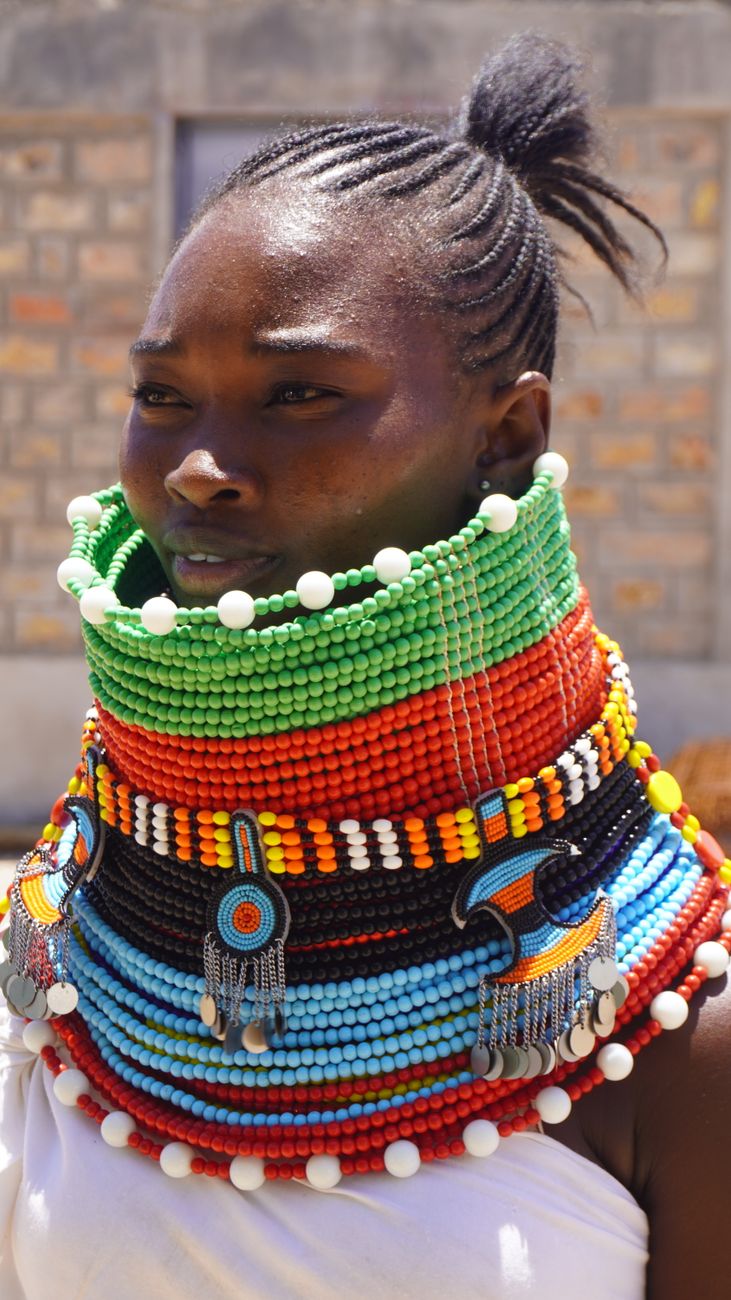
Cover photo by Silvia Chepkoech on Pexels.com


Leave a comment