An essay by Benjamin Munyao
There are children who grow up believing that tomorrow belongs to them, and there are children who learn, long before they understand the meaning of injustice, that tomorrow is something other people can afford. I have often wondered what happens to a society when its youngest generation inherits problems it never created. What becomes of a dream when hunger interrupts education, poverty determines opportunity, and circumstances decide a child’s destiny before life has properly begun? Across Africa, and in forgotten corners of the wider world, childhood is quietly being exchanged for survival.
I have seen how poverty changes the meaning of an ordinary morning. For some families, waking up means preparing breakfast, packing schoolbags, and discussing what the children will become one day. Elsewhere, dawn arrives with different instructions: find water, search for food, help with household work, or walk miles looking for an opportunity to earn a little money. While some children measure their lives through school terms and birthday celebrations, others count the days by the meals they manage to find. The difference is not intelligence, ambition, or willingness to work. It is the unequal distribution of opportunity.
A classroom should be one of the fairest places on earth. Inside its walls, a child should be able to discover mathematics, explore history, question the universe, and imagine a future beyond the boundaries of their birthplace. Yet millions face barriers before they even reach a school gate. Some sit in overcrowded rooms without sufficient textbooks, desks, or qualified teachers. Others abandon their education because their families cannot afford basic necessities. In remote communities, distance itself becomes an obstacle, while conflict and displacement can turn learning into an impossible luxury. Every missed lesson carries a cost that extends far beyond an examination result.
What troubles me most is that these circumstances are frequently mistaken for personal failure. A young person who leaves school may be described as unmotivated, yet nobody asks how often hunger interrupted concentration or how many responsibilities were placed upon those small shoulders. A child working in a market may be judged for being absent from class, while the circumstances that brought them there remain invisible. We are sometimes too quick to measure individual choices without examining the systems that narrow them. Behind many abandoned dreams lies a story of barriers that should never have existed.
Across parts of Africa, the contradiction is painful. The continent possesses extraordinary natural wealth, remarkable creativity, youthful energy, and communities rich in knowledge and resilience. Yet these resources do not automatically translate into decent living conditions for everyone. In mining regions, for example, minerals that enter international supply chains may eventually become components in devices used thousands of kilometres away. The people living closest to extraction sites can nevertheless struggle with inadequate schools, unsafe working conditions, environmental damage, and limited access to essential services. Global prosperity should never depend upon local suffering.
The same injustice appears in places where the land has been exhausted by drought, forests have disappeared, and rivers that once sustained entire communities have become unreliable. Climate change is often discussed through international conferences, scientific reports, and political speeches, but its consequences are experienced in kitchens, farms, villages, and neighbourhoods. When rainfall fails, agricultural families lose their harvests. When livestock perish, household incomes disappear. When clean water becomes scarce, children may spend hours searching for something that should be available within their communities. Those hours are taken from education, recreation, and the simple freedom of being young.
There is another tragedy that deserves greater attention: the invisible burden carried by children growing up amid conflict. Armed violence does not merely destroy buildings or redraw geographical boundaries. It interrupts childhood, separates families, closes schools, and leaves emotional wounds that survive long after the fighting ends. A classroom becomes a shelter, a playground becomes a place of fear, and bedtime stories are replaced by the sounds of uncertainty. Displacement forces families to abandon familiar surroundings, while young people are left wondering whether home is somewhere they will ever see again. The world often counts casualties and displaced populations, but statistics cannot adequately describe the experience of losing everything that is familiar to you before adulthood.
I also think about the young girls whose opportunities are restricted by circumstances beyond their control. In some communities, early marriage, gender discrimination, domestic responsibilities, and inadequate protection continue to interfere with education and personal development. A girl who should be preparing for examinations may instead be expected to carry responsibilities that deny her independence. Her ambitions are not necessarily smaller than those of her brothers; society simply places more obstacles along her path. Every time an opportunity is withheld because of gender, humanity loses knowledge, leadership, creativity, and potential that may never be recovered.
Meanwhile, the digital world continues to expand, promising a future of innovation, employment, and limitless information. Yet access remains deeply unequal. Some young people study through advanced technology, attend international programmes, and develop skills for emerging industries. Others struggle to obtain electricity, reliable internet connections, or even the basic equipment required to participate. Those who speak enthusiastically about artificial intelligence, technological revolutions and the future of work rarely give sufficient attention to those who may be excluded before the transformation begins. A generation cannot compete in a world it has never been given the opportunity to understand.
I do not believe that Africa lacks ambition. I see extraordinary determination in young people who establish small businesses, pursue education against difficult odds, support their families, and contribute to their communities with very little assistance. Across the continent, talent exists in classrooms, informal settlements, rural homesteads, crowded markets, and places that rarely attract international attention. What is missing is not ability but a fair environment in which that ability can flourish. Potential needs more than applause; it requires investment, protection, mentorship, decent institutions, and opportunities that do not depend entirely on family wealth.
Governments must be judged not only by economic announcements, infrastructure projects, or impressive development strategies, but also by the everyday conditions experienced by ordinary citizens. A functioning education system, accessible healthcare, clean water, child protection, and accountable public institutions are not extravagant ambitions. They are fundamental responsibilities. International organisations, charitable foundations, private companies, and development partners also have important roles to play. Assistance should strengthen local communities rather than create permanent dependence, while development projects must place human dignity above publicity and profit.
Parents, educators, journalists, and ordinary citizens also have a responsibility to challenge the belief that childhood suffering is simply an unavoidable part of life. We must question policies that leave vulnerable families behind, investigate exploitation, defend access to education, and listen to communities whose experiences rarely enter important conversations. Silence is an instrument of injustice when those with the ability to speak up choose convenience over accountability.
Perhaps the most painful question is not whether children possess dreams, but whether the adults entrusted with protecting them are willing to make those dreams possible. A child should not have to become a statistic before attracting attention. No family should need international publicity to receive basic assistance. No young person should have to choose between attending school and helping their household survive. These are not unreasonable expectations. They are the minimum conditions of a society that claims to value humanity.
When I consider the future, I refuse to imagine it as a privilege reserved for those born into comfortable circumstances. I imagine classrooms filled with curious minds, communities where clean water is accessible, hospitals where treatment does not depend on income, and societies where talent is recognised regardless of birthplace. I imagine a continent whose natural resources improve the lives of its people, rather than becoming symbols of wealth enjoyed elsewhere. Most importantly, I imagine children growing old enough to pursue their ambitions without first having to overcome the hardships that adults failed to address.
The future is not stolen in a single moment. It disappears through neglected classrooms, empty kitchens, broken promises, preventable suffering, and opportunities repeatedly denied. Every abandoned education represents a possibility interrupted. Every child forced into survival represents a responsibility neglected. Every unfulfilled ambition reminds us that progress means very little when entire generations are excluded from its benefits.
The measure of our humanity will not be the wealth we accumulate, the buildings we construct, or the technology we invent. It will be whether those who come after us inherit a world that is more compassionate, fair, and generous than the one we received. Children do not owe the world an explanation for the circumstances into which they are born. The world owes them the opportunity to become everything they are capable of being.
A future should be something every child inherits — not something only a fortunate few are allowed to own.
Author’s note: This piece is intended as a reflective nonfiction commentary on childhood poverty, inequality, education, environmental injustice, conflict, and the responsibilities of society. Its central argument is that protecting childhood is a collective human responsibility, not an act of charity.
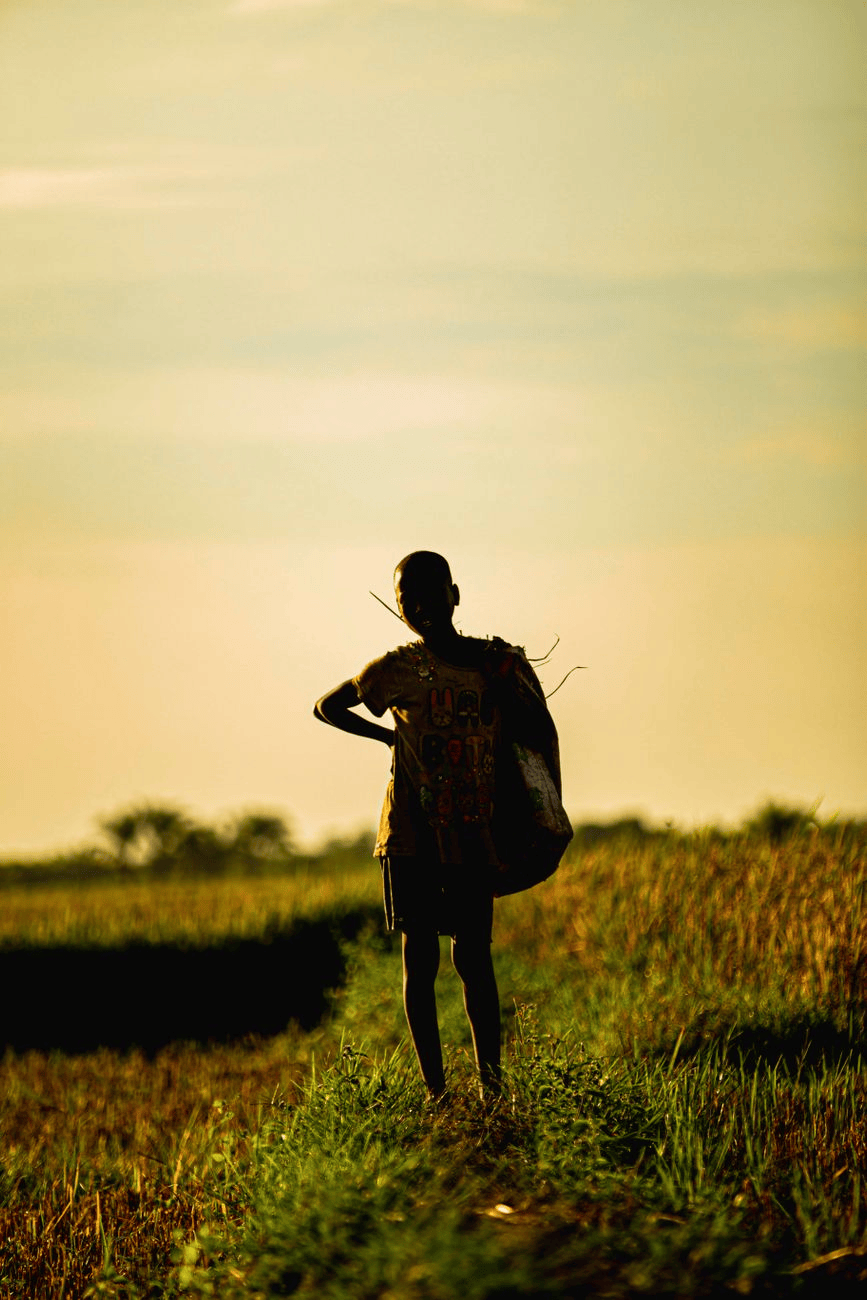
Photo by Safari Consoler on Pexels.com


Leave a Reply