An essay by Benjamin Munyao
There is a particular kind of silence that follows a person who has lost their home. It is not the silence of peace, nor the quietness of someone who has finally found rest. It is the silence of uncertainty — the silence of a mother who no longer knows where her children will sleep, a father who has watched his life’s work disappear, and a child who has begun to understand that home is no longer a place they can return to.
I have often wondered what it means to belong somewhere. For some of us, belonging is as ordinary as waking up in the same house, walking familiar roads and recognising the faces of neighbours. We complain about the weather, the cost of food and the difficulties of everyday life without realising how much security is hidden in these ordinary privileges. Somewhere in the world, however, millions of people wake up without knowing whether they will survive the day, let alone where they will spend the night.
Their journeys do not always begin with a choice. Sometimes they begin with gunfire. Sometimes with a government announcement, an advancing army, a burning village, a collapsing economy or a river that has swallowed the land on which generations built their lives. And sometimes, they begin with a simple decision: to leave before staying becomes fatal.
I imagine a mother standing outside her house, holding the hand of a little boy. Behind her is everything she understands about life. The doorway where her husband once greeted her, the kitchen where she prepared meals, the tree beneath which her children played, and the small possessions collected through years of sacrifice. Ahead is a road whose destination she cannot pronounce. She carries no guarantee that tomorrow will be kinder than yesterday. She carries only her child and the desperate determination to keep him alive.
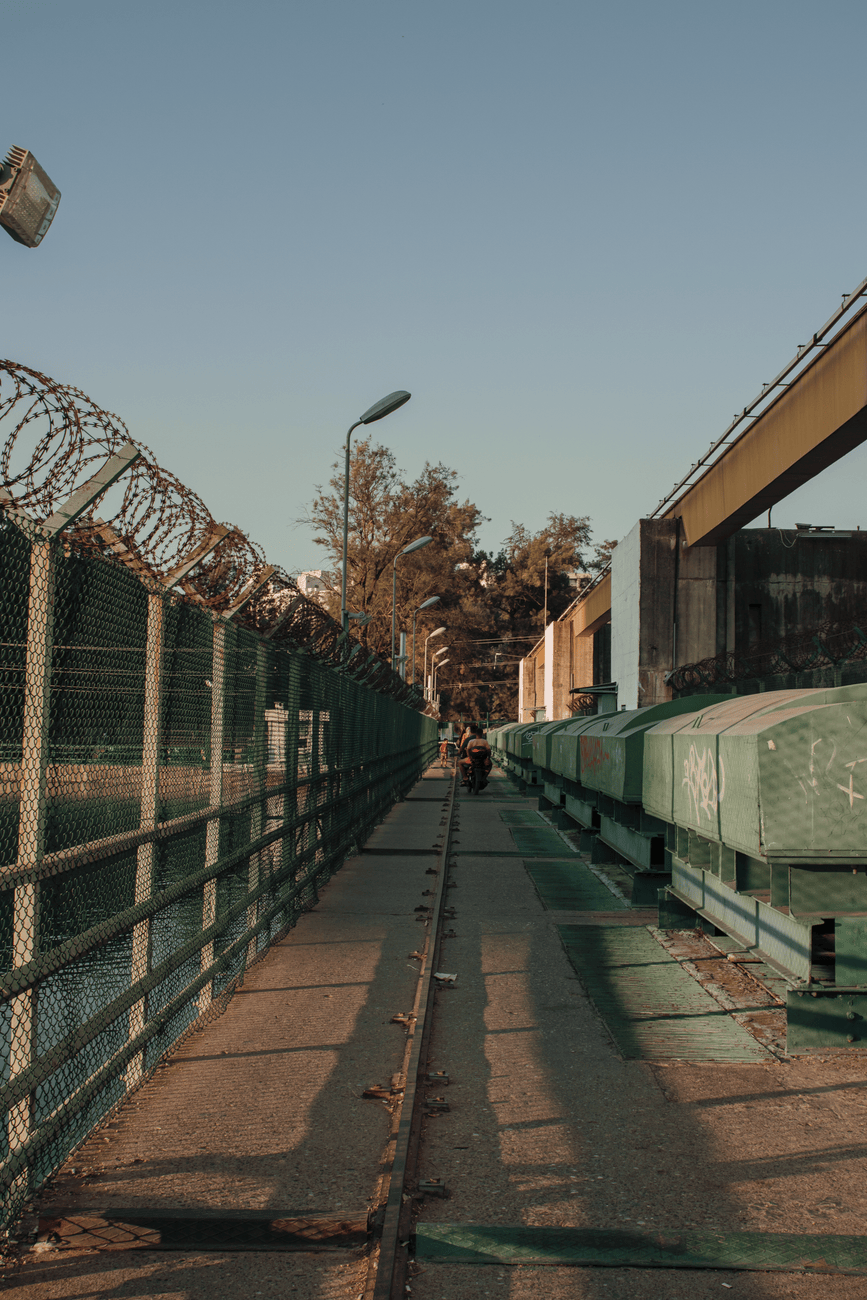
At the border, she becomes a number in a system that does not know the stories behind the faces. Officials ask questions. Documents are examined. Names are recorded. People wait beneath temporary shelters, beside fences and along roads that seem to lead nowhere. A child cries. An elderly man sits quietly with his belongings beside him. A young woman looks across the border, wondering whether the other side will offer the safety that the side she left could not provide.
I find something deeply troubling about a world in which a person’s freedom to live safely can depend so heavily on the accident of where they were born.
Borders are drawn on maps, defended by laws and protected by governments. They serve purposes that nations consider important. Yet suffering does not always respect the lines that separate countries. War crosses them. Hunger crosses them. Climate disasters cross them. Human desperation crosses them. The people escaping these realities are often left negotiating with systems that struggle to accommodate their arrival.
In Europe, Africa, Asia, the Middle East and the Americas, displacement wears different faces, but the human questions remain remarkably similar. Who will protect us? Where will our children go to school? Will we be allowed to work? Will someone believe our stories? Will the world remember us when the cameras leave?
I think particularly about the children. A child should be collecting memories of childhood, not memories of escape. They should be learning the names of trees, discovering friendships and arguing over football. Instead, some learn to recognise the sound of explosions, the meaning of checkpoints and the fear of being separated from their parents. Their education is interrupted, their friends scattered and their understanding of the world shaped by circumstances they never created.
What happens to a generation raised between temporary shelters and uncertain futures? What happens when the word temporary becomes the description of an entire childhood?
The international community has developed conventions, humanitarian institutions and policies intended to protect displaced people. These efforts matter. Aid workers, volunteers, host communities and ordinary citizens continue to demonstrate extraordinary compassion. But compassion must not end with donations, photographs and sympathetic statements. It must become sustained protection, responsible leadership, fair policies and practical opportunities for people to rebuild their lives.
We must also recognise the generosity of communities that welcome strangers despite facing their own economic difficulties. A family that shares food with a displaced neighbour, a teacher who makes room for another child, or a volunteer who helps someone navigate an unfamiliar system may never appear in international headlines. Yet these ordinary acts restore something that conflict and displacement attempt to destroy: human dignity.
I do not believe that every border can simply disappear, nor do I pretend that nations have no responsibility to manage migration. But I believe that security and humanity should never become enemies. Protecting national interests should not require abandoning the basic dignity of another human being.
Perhaps the greatest tragedy is not only that people are forced to leave their homes but that, after surviving the circumstances that drove them away, they may spend years trying to convince the world that their lives are worth protecting.
I want us to imagine a different ending for the mother and her child. Not a life defined forever by a refugee registration number, but one in which the child returns to school, makes friends and grows up with the freedom to dream. A life in which the mother can work, contribute to society and sleep without wondering whether tomorrow will bring another displacement. A life in which safety is not a temporary gift but a foundation upon which the future can be built.
The people between borders and barbed wire are human beings. They carry stories that could belong to any family, any community, any nation.
One day, the borders that divide us may change. Governments may rise and fall, conflicts may end — and the fences that once appeared permanent may eventually disappear. But the memories of those who waited outside them will remain.
And when history asks what we did while people searched for somewhere safe to belong, I hope our answer will not be that we watched, debated and looked away.
I hope we can say that we opened the door.
Words copyright to Benjamin Munyao David 2026
Photo by Halil Yetkin on Pexels.com


Leave a Reply