By Ben Munyao
Some tragedies are remembered because nobody knew they were coming. Others are remembered because everybody knew, yet the suffering continued.
There is something deeply disturbing about a world that can witness suffering from every corner of the earth and still find a way to continue its ordinary business. A child can lose a home in the morning, a mother can bury her family before sunset, and thousands of kilometres away, people can sit around polished tables discussing international trade, economic growth and political interests. Both realities exist on the same planet. Both happen under the same sky. Yet one world continues to prosper while another struggles simply to survive.
The world knew.
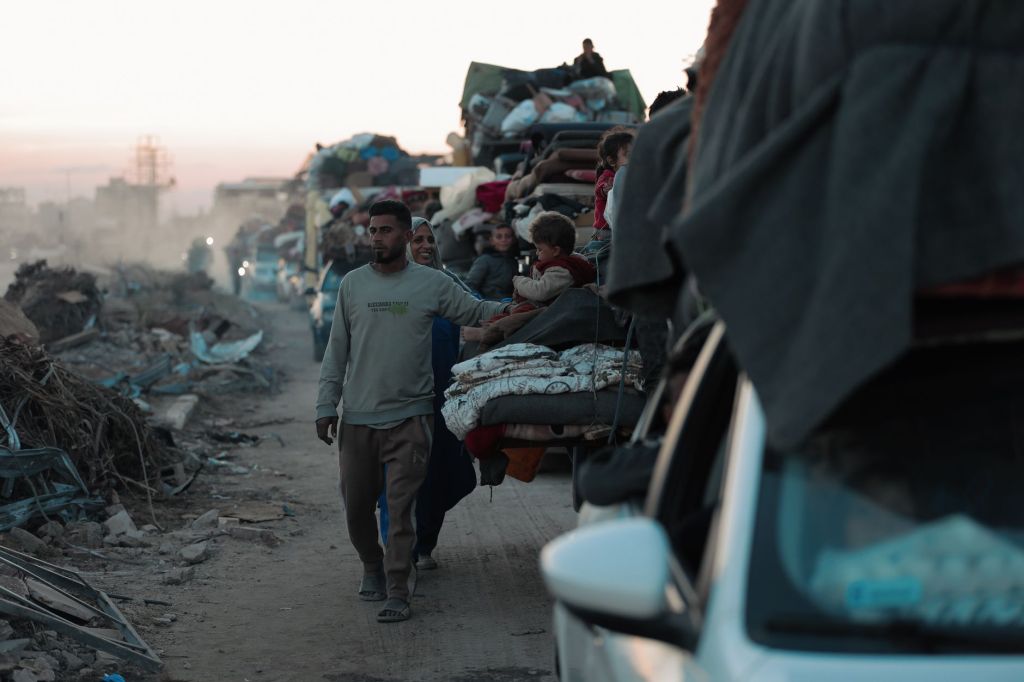
It knew when cities became battlefields and ordinary neighbourhoods turned into places where families feared the sound of approaching vehicles. It knew when children lost their classrooms, when hospitals struggled to function, when families crossed borders carrying whatever possessions they could save, and when parents discovered that escaping violence did not necessarily mean finding safety. These were not secrets hidden beneath the earth. They were visible realities, documented by journalists, described by witnesses, discussed in international meetings and carried into homes through television screens and mobile phones.
And still, the suffering continued.
In Sudan, the conflict that erupted in April 2023 forced millions from their homes and devastated communities. Families who once knew the ordinary routines of work, school, markets and neighbourhood life found themselves searching for safety in unfamiliar places. For those forced to flee, home became a memory, and the future became a question without an easy answer.
In the Democratic Republic of the Congo, decades of insecurity and renewed fighting have repeatedly uprooted communities. Behind every report of displacement are people whose lives cannot be reduced to a geographical location on a map. There are parents trying to keep their children together, young people whose education has been interrupted, and families who have learned that rebuilding a home is difficult when insecurity can return before the walls are complete.
Different histories, different political circumstances, different battlefields; yet the human consequences repeatedly lead to the same questions: Who protects ordinary people when the world around them becomes dangerous? And what does humanity mean when protection becomes a matter of debate?
These are not distant stories simply because they happen beyond our national borders. Suffering does not become less human when the people experiencing it speak another language, belong to another nation or worship differently. A hungry child does not experience hunger according to geography. A mother does not love her children less because she lives in a country whose name rarely appears in international headlines.
Yet the attention of the world is often unequal. Some crises occupy the front pages for months, while others struggle to remain visible. Some suffering becomes a subject of urgent international discussion; other suffering becomes so familiar that people begin treating it as part of the background of existence. The danger is not only that we forget the victims. It is that we gradually become comfortable with their absence from our daily concerns.
The numbers themselves should disturb us. At the end of 2024, an estimated 123.2 million people worldwide were forcibly displaced. By the end of June 2025, the global figure remained above 117 million. The 2026 humanitarian outlook identified 239 million people in need of urgent humanitarian assistance. Behind these figures are lives interrupted on a scale that should make every government, every institution and every individual question what kind of world we are building.
But statistics have a strange weakness. They can communicate the size of a tragedy while concealing its intimacy. A figure can tell us how many people have been displaced, but it cannot fully explain what it means for a father to leave behind the house he spent twenty years building. It cannot describe the silence of a classroom after its pupils have scattered. It cannot measure the pain of a mother who has no answer when her child asks when they will return home.
A statistic can be read in seconds. A human life takes years to understand.
Perhaps this is where our collective failure begins: when we become more comfortable discussing the scale of suffering than confronting the responsibility it places upon us.
Governments cannot hide indefinitely behind statements of concern. Political leaders cannot repeatedly promise peace while allowing the conditions that destroy civilian life to continue without accountability. International institutions cannot measure their success only through meetings held, resolutions discussed or reports published. Humanitarian organisations cannot be expected to replace the political will required to prevent wars, protect civilians and address the conditions that make entire communities vulnerable.
Humanitarian assistance matters enormously. Food, clean water, shelter, medical care and protection save lives. The people who provide these services often work under extraordinary conditions, sometimes risking their own safety to reach others. Their work deserves respect. But emergency assistance should never become an excuse for accepting permanent emergencies.
A world that repeatedly delivers food to displaced families without seriously confronting why they were displaced has not completed its responsibility. A world that sends medicine to communities while ignoring the destruction of the systems that should provide healthcare has not solved the problem. A world that celebrates temporary relief while leaving the causes of suffering untouched must ask itself whether it is treating the wound or simply learning to live with it.
There is also a responsibility that belongs to ordinary people.
We may not command armies, negotiate ceasefires or control national budgets. We may not sit in the rooms where decisions about borders, security and international relations are made. But we possess something that should never be underestimated: the ability to refuse indifference. We can question injustice, demand accountability, support credible humanitarian work, challenge dehumanising language and resist the temptation to treat another person’s suffering as somebody else’s problem.
Silence does not always mean agreement, but repeated silence in the face of preventable suffering can become part of the environment in which injustice survives.
The most uncomfortable question is not whether the world has enough information. It is whether information has become a substitute for action. We have developed extraordinary ways of recording human suffering. We can transmit images across continents in seconds, preserve testimonies, publish investigations and hold conversations that reach millions. Yet the ability to witness a tragedy is not the same as the willingness to prevent its continuation.
We must also recognise that the world is not one person with one decision, and responsibility is not shared equally. Those who start wars, those who deliberately target civilians, those who obstruct essential assistance and those who possess the power to influence events have different obligations. Accountability must be specific. Justice must be more than a word used in speeches. And the protection of human life must not depend on the political usefulness of the people whose lives are at risk.
Perhaps one day, history will ask what we did when the suffering was visible. It will not only ask how many wars were fought, how many families were displaced or how many children lost their childhoods. It will ask what those who possessed influence did with the knowledge they had. It will ask why warnings were repeatedly heard but so many preventable tragedies continued. It will ask whether political convenience became more important than human dignity, whether economic interests outweighed compassion, and whether the language of peace became easier to pronounce than the work required to achieve it.
And when that day comes, we must hope that our answers will contain more than explanations.
Because the world does not suffer from a shortage of information about human misery. It suffers from a shortage of consistent courage to confront it.
We have seen what happens when hatred is allowed to grow, when corruption consumes public responsibility, when powerful people place their interests above human lives, and when the suffering of strangers becomes an acceptable price for somebody else’s advantage.
The children of tomorrow should not inherit a world in which their greatest lesson is that nobody came when help was needed. They should inherit a world where borders do not erase compassion, where leadership is measured by the lives protected rather than the speeches delivered, and where human dignity is not reserved for those fortunate enough to be born in peaceful places.
Let history remember that the world knew. Let it remember that the warnings were there, the evidence was visible and the suffering was real. But let it also remember those who refused to look away, those who spoke when silence was easier, those who helped when helping was difficult, and those who continued to believe that another person’s life was worth defending.
The world cannot claim humanity while abandoning human beings
This is not merely a story about wars, displacement, hunger or political failure. It is a story about the kind of people we have chosen to become. It is about a civilisation that has learned to communicate across continents but has not always learned to care beyond its own interests; a world capable of extraordinary scientific achievements, economic advancement and technological innovation, yet still struggling to guarantee the most basic conditions of human survival for millions of its people.
The lesson is that awareness must lead to responsibility, responsibility must lead to action, and action must be measured by the human lives it protects. Governments must be held accountable for their decisions and failures. International institutions must pursue more than declarations. Communities must resist hatred and indifference. And individuals must remember that compassion is not a weakness, nor is the suffering of strangers an inconvenience to be ignored.
We cannot rewrite every tragedy that has already happened. We cannot return every child to a childhood stolen by conflict, rebuild every destroyed home overnight or bring back every life lost through violence and neglect. But we can refuse to normalise suffering. We can challenge the decisions that allow it to continue. We can insist that peace, justice, dignity and protection are responsibilities rather than privileges.
History will not remember humanity only for the monuments it constructed, the wealth it accumulated, the technology it invented or the power it exercised. It will also remember the lives it failed to protect and the moments when it had an opportunity to do better.
One day, our children may ask what we did when the world was hurting. May we have something meaningful to tell them. May our answer include courage, compassion, accountability and action.
Because the measure of a great world is not how successfully its powerful people live, but how faithfully it protects those who have the least power.
The world knew. The world looked away. But the next chapter of humanity does not have to be written that way.
We still have a choice.
Words copyright to Benjamin Munyao David 2026
Photo by Hosny salah on Pexels.com
Sources:
- UNHCR – Global Trends 2024
- UNHCR – Mid-Year Trends 2025
- United Nations Office for the Coordination of Humanitarian Affairs (OCHA) – Humanitarian Situation Reports
- OCHA – Global Humanitarian Overview 2026


Leave a Reply