The People Humanity Failed
By Benjamin Munyao
There are tragedies that happen because nature is cruel, and there are tragedies that happen because human beings choose not to act. The first may be unavoidable, but the second carries a responsibility that no government, international organisation or powerful institution should escape. Across the world, people continue to die not simply because food is scarce, medicine is unavailable or war has destroyed their homes, but because the systems designed to protect them have repeatedly failed. Their suffering is reported, photographed, discussed at conferences and converted into statistics, yet the people behind those numbers remain desperately waiting for something more powerful than sympathy: action.
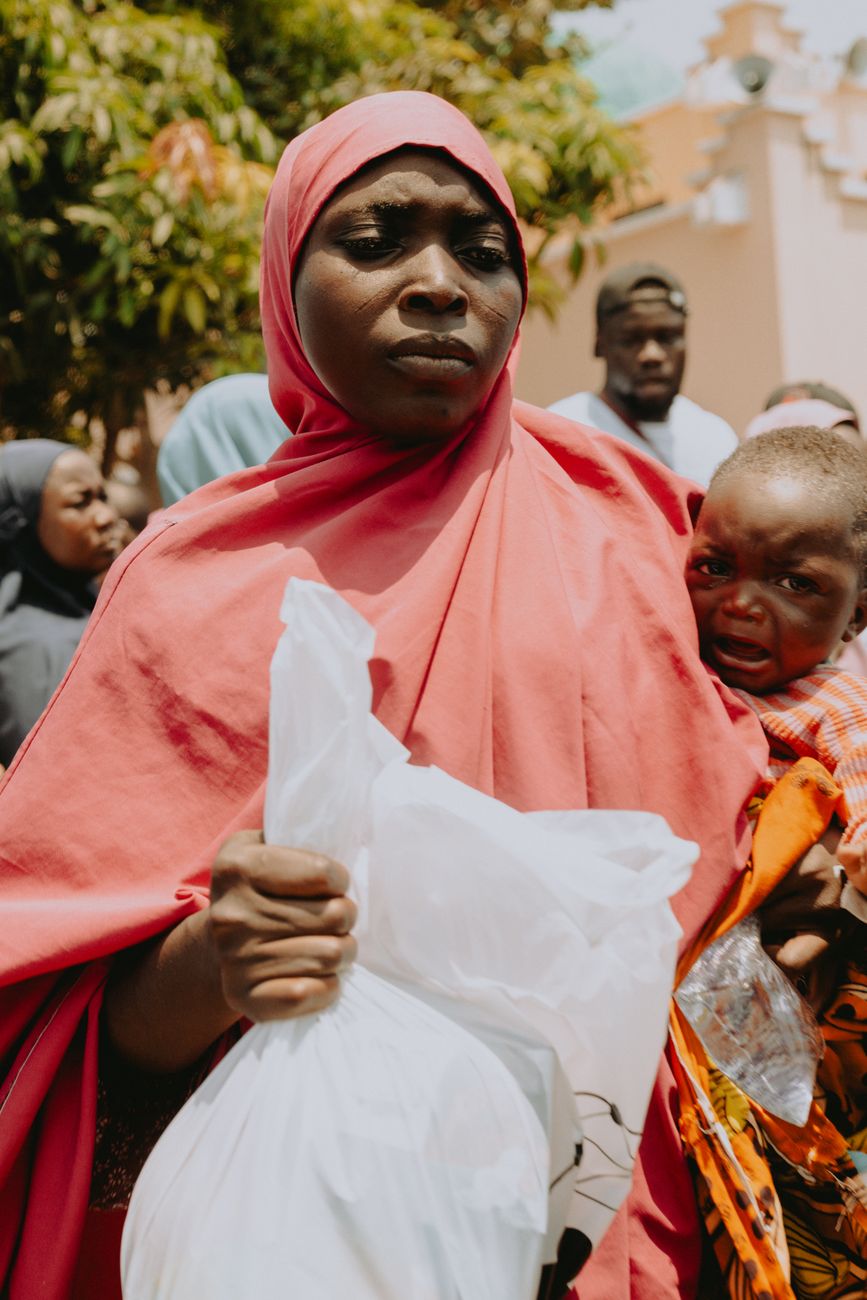
Somewhere in Africa, a mother wakes before sunrise and begins another search for clean water. Her youngest child has been coughing throughout the night. The nearest health facility is several kilometres away, and even if she manages to reach it, there is no guarantee that the medicine her child needs will be available. She has heard speeches about universal healthcare, development programmes and international partnerships. She has seen officials arrive in expensive vehicles, accompanied by cameras and carefully prepared promises. But when the visitors leave, the road remains dusty, the hospital shelves remain empty, and her child’s suffering continues. To the world, she may be one woman among millions. To her child, she is the only remaining hope.
This is the contradiction that defines much of our modern world. Humanity has developed extraordinary scientific knowledge, sophisticated communication systems and institutions dedicated to protecting human dignity. We can send spacecraft beyond our planet, manufacture machines capable of performing complicated operations and transfer billions of dollars across continents within seconds. Yet we still struggle to guarantee a child a safe place to sleep, a sick person access to basic treatment or a displaced family a permanent place of protection. The problem is not always the absence of resources. Sometimes it is the failure to distribute them fairly, the corruption that diverts them, the bureaucracy that delays them and the indifference that allows suffering to become ordinary.
When conflict breaks out, families are often the first to lose everything and the last to recover. A farmer who spent decades cultivating his land may suddenly find himself running through the night with his children, leaving behind the house his parents built. A young girl may exchange her classroom for a crowded displacement camp. An elderly man may spend his final years searching for relatives whose whereabouts remain unknown. Their lives are interrupted by decisions made by armed groups, political leaders and powerful interests far beyond their control. After the cameras move elsewhere and international attention finds another crisis, these families remain with the consequences. Their emergency does not end when the headlines disappear.
Humanitarian organisations were established because suffering should never be ignored simply because it happens beyond our borders. Their work has saved countless lives through emergency medical assistance, food distribution, shelter, education and protection. Their employees often operate under dangerous conditions, sacrificing personal comfort to reach people in desperate circumstances. Their contribution deserves recognition. However, the humanitarian sector must also remain open to difficult questions. Are promised resources reaching the intended communities? Are affected people involved in decisions about their own needs? Are programmes evaluated according to the lives they improve rather than the reports they produce? When interventions fail, are mistakes honestly acknowledged and corrected? Compassion must never become an excuse to avoid accountability.
Governments carry an even greater responsibility because protecting citizens is not an act of generosity; it is a fundamental public duty. A government cannot celebrate development while communities lack safe drinking water. It cannot announce healthcare achievements while patients are turned away for lack of essential medicines. It cannot promise education for every child while schools remain inaccessible to those living in poverty. Nor should public officials treat citizens’ suffering as an inconvenience to be managed through carefully written statements. Leadership is measured not only by the projects inaugurated, but also by the lives protected, the suffering prevented and the dignity preserved.
Perhaps the most painful part of institutional failure is that many tragedies are preceded by warnings. Communities report dangerous living conditions. Health workers raise concerns about shortages. Environmental organisations document contamination. Families appeal for assistance long before a crisis becomes international news. Sometimes the evidence is available, the danger is understood and the solutions are known. Yet action arrives too late, or does not arrive at all. When preventable suffering becomes a repeated pattern, society must ask uncomfortable questions about responsibility. Who received the warnings? Who had the authority to intervene? What decisions were made? And why were ordinary people left to carry the consequences?
Behind every statistic is a human story that deserves to be heard. A number representing displaced children does not reveal the little boy who still remembers the school he abandoned. A report describing malnutrition cannot fully communicate the pain of a mother watching her child grow weaker. A figure representing preventable deaths does not show the empty chair at a family table or the birthday that will never be celebrated again. Statistics are necessary for understanding the scale of a crisis, but they must never become a hiding place for those responsible for addressing it. Human beings should not have to become international news before their lives are considered valuable.
There is also a responsibility that belongs to the wider world. International institutions, wealthy nations, private corporations and ordinary citizens are connected to the conditions experienced by vulnerable communities in ways that are sometimes uncomfortable to acknowledge. The minerals in our electronic devices, the food in our supermarkets and the energy that powers modern economies may have connections to distant communities facing environmental destruction, exploitation or insecurity.
Global progress cannot be considered truly successful when its benefits are celebrated in comfortable cities while its human costs are carried by people whose voices rarely reach the decision-making table. Development that sacrifices human dignity is not development worth celebrating.
But this story should not end with condemnation alone. Across the world, there are doctors who continue treating patients despite inadequate facilities, teachers who educate children in difficult circumstances, community volunteers who distribute food without expecting recognition and courageous individuals who challenge injustice even when doing so places them at risk. Survivors rebuild homes, families support one another and local organisations create possibilities where larger institutions have failed. These people remind us that humanity has not disappeared. What is needed is a stronger commitment to support their efforts, protect their rights and ensure that responsibility does not rest entirely on the shoulders of those already struggling.
The people humanity failed are not asking for the impossible. They are asking for the basic conditions that make human life meaningful: safety, healthcare, education, justice, shelter, dignity and the opportunity to live without constantly fearing tomorrow. Their suffering should not be reduced to fundraising campaigns, political arguments or temporary expressions of sympathy. It should inspire measurable change, transparent institutions and decisions that place human lives above personal interests.
Governments must answer to their citizens, humanitarian organisations must remain accountable to the people they serve, and the international community must recognise that distant suffering is still human suffering.
The greatest lesson of this story is that humanity is not measured by how many promises we make, how many conferences we organise or how much money we announce for those in need; it is measured by how many lives we protect when nobody is watching.
A government that ignores its people has forgotten the purpose of leadership, an organisation that abandons those it promises to serve has forgotten the meaning of compassion, and a society that becomes comfortable with preventable suffering has lost something more valuable than wealth: its conscience.
We must learn that silence can protect injustice, delay can cost lives and indifference can become another form of cruelty.
Let us never wait until a child is buried, a village is destroyed or a family is permanently displaced before we recognise their humanity.
The world does not need more beautiful speeches about saving lives; it needs people willing to save them.
For one day, history will not only ask what happened to those who suffered. It will also ask what the rest of us knew, what we could have done, and why we chose to wait.
Words copyright to Benjamin Munyao David 2026.
Photo by Bobby Dimas on Pexels.com


Leave a Reply