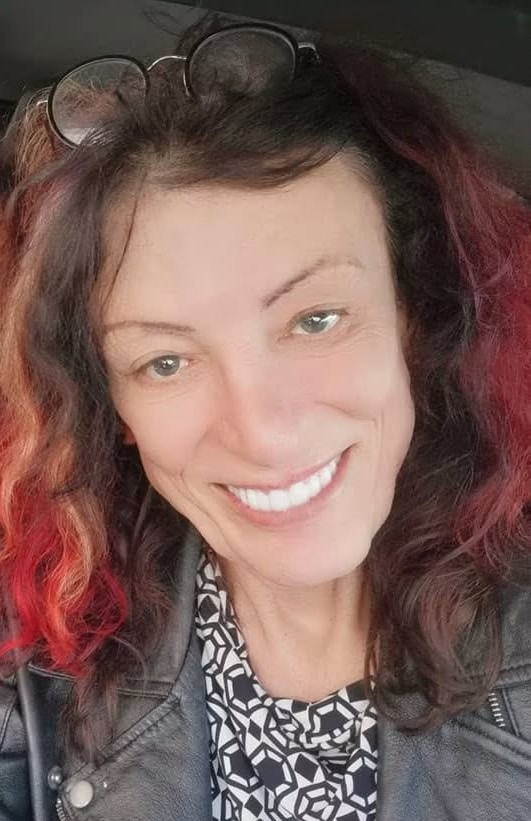
Thanks so much for agreeing to this interview, Kari.
Firstly, how would you describe yourself?
A Sydney-based independent researcher, essayist and poet who came to this work late, after careers in the public service and IT. I’m curious about why societies hold together, and why they sometimes come apart.
What would you say is your main identity?
Independent researcher and essayist. I’m also a poet, and a trans woman who transitioned after fifty. All of those feed the same habit of looking at systems from the outside.
Who are some of your role models — people you respect and learn from?
- Immanuel Kant, for insisting that “the public use of one’s reason must always be free”. You can do your duty and still think for yourself.
- John Locke, for seeing that forcing people to conform doesn’t make anything true.
- John S. Service, the State Department “China Hand” who reported honestly from China in the 1940s, was purged in the McCarthy era for being right, and was cleared years later.
- And Daniel Ellsberg, who leaked the Pentagon Papers because the public deserved the truth about a war fought in its name.
All four put conscience and evidence ahead of convenience, and that’s the line I try to walk.
What are three main projects or goals you’re focusing on at the moment?
i. CAMS, the Complex Adaptive Model of Societies: a framework for reading the internal structure of nations over time.
ii. Neural Nations (https://neuralnations.org/): the public home for that work, including a dated Research Diary.
iii. Sealed forecasts for the United States from 2026 to 2028, written and locked in advance so the outcomes can test the model.
Tell us a little more about CAMS.
CAMS treats a society as eight interacting parts, including leadership, defence, commerce, workers and the keepers of knowledge and meaning. Each part is scored on coherence, capacity, stress and abstraction. From those scores it tracks how well the parts work together. I don’t call it validated. I think of it as a thermometer, so I seal predictions before events and publish the misses alongside the hits.
What are three achievements you’re proud of?
i. Building CAMS from first principles into a working, openly documented method.
ii. My poetry collection, *Wake Me Up When We Arrive*.
iii. Transitioning after fifty and making the life I’d put off for decades.
Tell us more about your transition.
I knew early on, but I set it aside for decades. I began hormones in 2007 and had surgery in Chon Buri, Thailand, in November 2011. I think of that as the day the poet arrived. My first poem, “The Daughters of the Doctor”, told that trip as a starship voyage and was published in *Polare* in July 2012. *Wake Me Up When We Arrive* grew out of that journey. It isn’t published yet as a collection, though several of its poems have appeared in anthologies. Its title poem runs from Cambrian seas to the campfire and ends with “Are we there yet? No? Then wake me up when we arrive.” It’s about arriving late at yourself and finding it’s still worth the trip.
If people want to get in touch with you, can they? If so, how?
Yes, at kari.freyr.4_at_gmail.com or through https://neuralnations.org/.
How can people support your work?
By reading and sharing the work at neuralnations.org and in the wintermute repository (https://github.com/KaliBond/wintermute), and by challenging it. Critical feedback and independent tests are the most useful help of all.
Is there anything else you’d like to add?
I started this [research work] in my seventies. It’s never too late to ask a big question and test your answer in public. The poems and the model tell the same long history, one as myth and one as measurement, and I’m still curious where it goes next.
For some poetry by Kari, see:
https://www.poemhunter.com/poem/the-daughter-of-durga


Leave a Reply