By Benjamin Munyao
When a river loses its voice, it is not only water that disappears; something inside us begins to dry.
I grew up understanding that a river was more than water. A river was a road without dust, a mirror without a frame, a storyteller that never needed a mouth. In Kenya, rivers have carried our childhoods, our cattle, our crops, our prayers, and sometimes our dead. They have passed through villages carrying the secrets of generations, whispering beneath bridges where lovers once stood and children once laughed. We rarely asked where their songs came from. We simply believed they would always be there. Then one day, somewhere between the hills and the crowded places where concrete began swallowing soil, I understood something that frightened me: the river had become quiet.
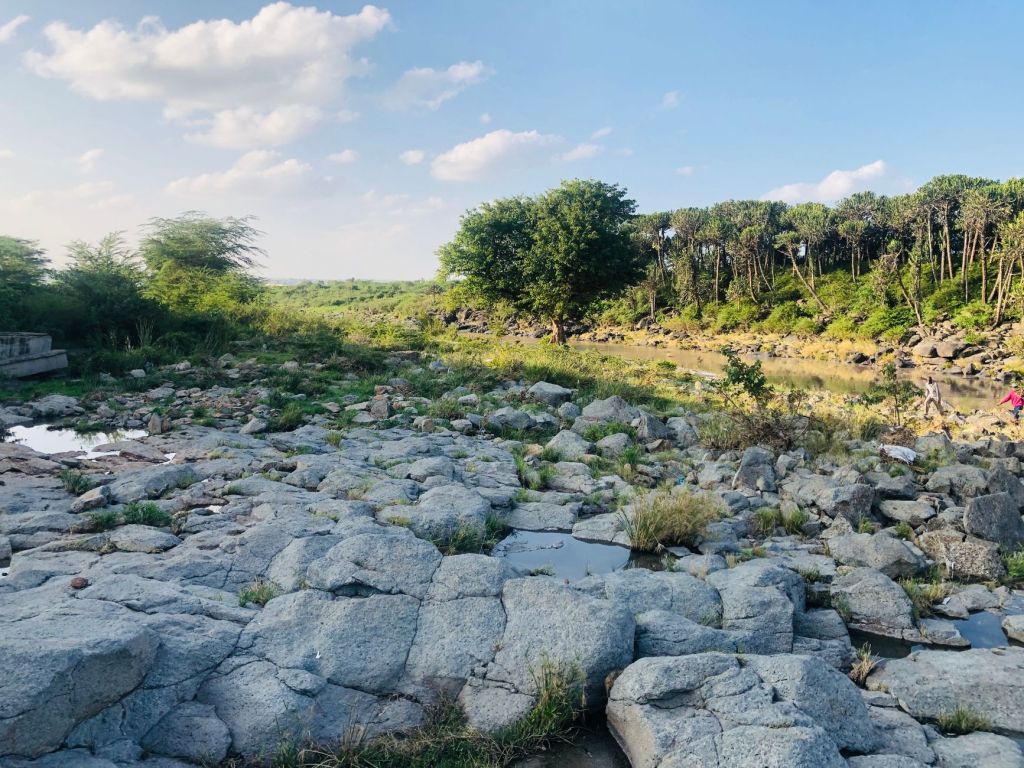
It did not happen like thunder. There was no great announcement from the sky. The river did not stand before us and accuse us. It simply began to disappear, little by little, the way an old man leaves a room after everyone has stopped listening to him. First came the silence of the frogs. Then the dragonflies became fewer. The reeds that once bent toward the water stood like tired soldiers. The stones that had spent years beneath the current were exposed to the sun, naked and pale. Children who once knew the river by the sound of its rushing water began to know it by the smell of plastic trapped along its banks. And the river, which had once spoken in a thousand silver voices, became a thin thread moving cautiously through a wounded land.
I remember standing beside it and thinking of how easily human beings learn to live beside destruction. That may be one of our greatest tragedies. We become accustomed to what should shock us. A dead fish becomes ordinary. A blackened stream becomes ordinary. A forest cut down for charcoal becomes ordinary. A mother walking farther each morning to find water becomes ordinary. Even hunger can become ordinary when it visits the same homes for long enough. We give suffering new names — hard times, fate, drought, development, poverty — and by naming it, sometimes we convince ourselves that we have understood it.
But the earth does not understand our excuses.
It remembers.
It remembers the tree we cut because we needed firewood. It remembers the wetland we filled because someone wanted another building. It remembers the forest we entered with axes and left with silence. It remembers the plastic bottle thrown into the stream because there was nowhere else to throw it. It remembers the season when rain came and we called it a blessing, then watched the flood carry away houses because we had built where the river once belonged. Nature keeps no newspaper, yet nothing is forgotten. Every wound becomes a sentence in the long manuscript of the land.
And Kenya has been reading that manuscript aloud.
We have seen rivers swell beyond their banks and claim roads, homes and livelihoods. We have watched drought turn green landscapes brown and force families to make impossible choices. We have watched livestock weaken beneath merciless skies. We have watched children carry yellow containers over distances that should never belong to childhood. We have watched farmers stare at clouds that refuse to open, their hands still holding seeds whose future has become a question. Climate change is often discussed in conferences in polished rooms, beneath electric lights and carefully printed banners. But outside those rooms, it has a human face. It is the grandmother waiting for water. It is the farmer counting empty seasons. It is the child learning too early that thirst can be a way of life.
Yet somewhere inside all this sorrow, I have also discovered something more powerful than despair.
People.
I have seen Kenyans plant trees with hands that had every reason to be tired. I have seen communities protect springs because they understood that a spring is not merely water — it is tomorrow arriving early. I have seen young people clean rivers, farmers restore damaged soil, conservationists defend forests, and ordinary citizens refuse to believe that environmental destruction is simply the price of progress. Their hands are small against the enormity of the crisis, but history has never belonged only to people with enormous hands. Sometimes change begins with one person bending beside a polluted stream and picking up a bottle everyone else had learned to ignore.
Perhaps that is where our hope lives.
Not in speeches.
Not in promises.
In hands.
The river taught me this: humanity is not separate from the environment. We are drinking from the same story we are writing. When the forest falls, something falls inside us. When the river becomes poisoned, our own blood becomes poorer. When the soil dies, our tables become emptier. We are not standing outside nature looking at it through glass. We are inside it. We are made from its rain, its dust, its rivers, its forests, its sunlight. We carry the earth in our bones and still behave as though we can abandon it without abandoning ourselves.
I sometimes wonder what our children will ask us years from now.
They may stand beside a river whose water has returned, clear enough to hold the sky, and ask us why we ever allowed it to disappear.
Or perhaps they will stand beside dry stones and ask a harder question:
Did you know the river was dying?
And we will have no honest answer except yes.
Yes, we knew.
We heard the silence.
We saw the empty banks.
We watched the forests disappear.
We watched the seasons change.
We knew.
But I want to believe that knowing is not the end of the story. Perhaps it is the beginning. Perhaps somewhere between the first tree planted and the first river cleaned, between the child carrying water and the adult finally listening, humanity can still choose another ending.
Because rivers are patient.
They wait beneath the earth.
They gather in the mountains.
They return when the land is given a chance to breathe.
And perhaps one morning, long after we have gone, a Kenyan child will stand barefoot beside a restored river and hear something our generation almost forgot — the ancient music of water moving freely over stones.
The child will listen.
The river will sing.
And this time, perhaps, we will have learned how to listen.
Words copyright to Benjamin Munyao David 2026
Cover photo by Lenny Mungai on Pexels.com (Athi River, Kenya)


Leave a Reply