The city that the world forgot to see, where I learnt that dignity has no address
By Benjamin Munyao
I once lived in Kibera.
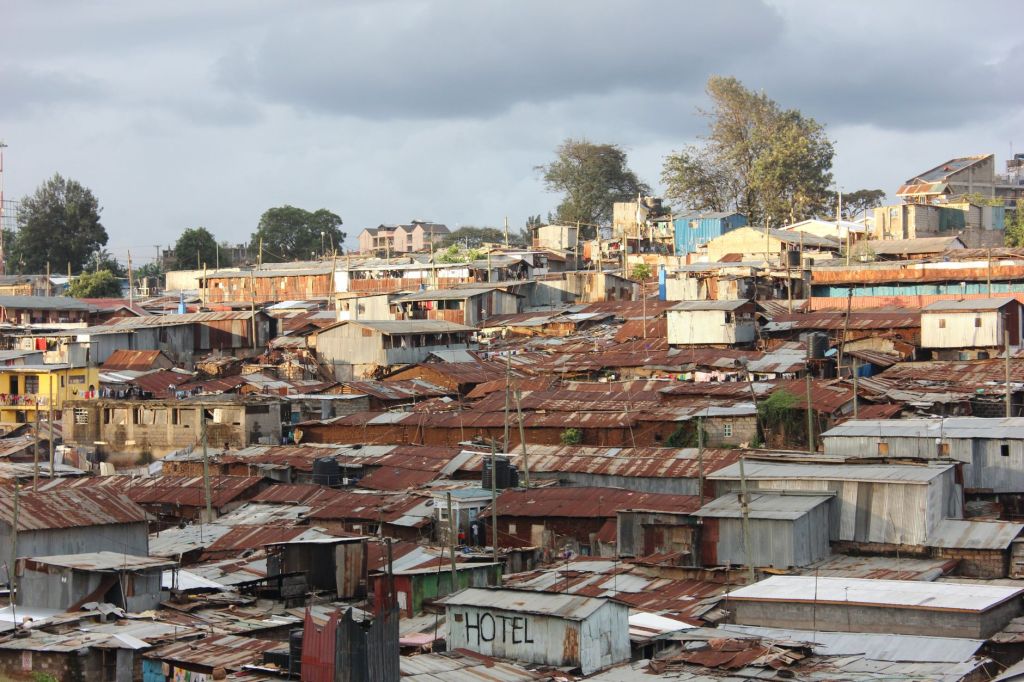
I do not say this because I want anyone to feel sorry for me. I say it because Kibera is a chapter of my life written in a language that only those who have walked its narrow paths at dawn may fully understand. I lived among iron sheets that rattled when the Nairobi wind came calling, among muddy pathways that remembered every footprint, among small rooms where families somehow created entire worlds from almost nothing. I learned there that poverty is not an identity; it is a condition, and conditions can change when people are given the opportunity, dignity, infrastructure, education, security, and belief that they deserve.
When I remember Kibera, I do not first remember what the world says about it. I remember mothers waking before sunrise, young men searching for work, children running to school with dreams much larger than their homes, traders arranging their small businesses with the seriousness of people managing empires, artists painting colour onto walls, neighbours sharing food when another household had nothing, and old men carrying memories of a Nairobi that has changed many times around them.
I remember laughter. I remember struggle. I remember rainwater turning pathways into rivers. I remember the smell of cooking fires rising between houses. I remember nights when the darkness seemed enormous and mornings when the sun returned as if to whisper that another day was still possible. Kibera taught me something I have carried ever since: sometimes the poorest-looking places contain some of the richest human beings, not in money, but in courage.
There is a temptation, when speaking about Kibera, to reduce it to statistics, photographs, headlines and dramatic descriptions. The world has photographed its poverty so many times that sometimes I wonder whether people have forgotten to photograph its humanity. Outsiders arrive with cameras and leave with stories about overcrowding, sanitation, unemployment and hardship. Those realities are real, and they must never be romanticised. But I believe there is another story waiting to be told — the story of people who refuse to become their circumstances.
I lived close enough to understand that the woman selling vegetables beside a railway path is not merely a poor woman. She is a businesswoman, a mother, a strategist, a provider and often the economic foundation of an entire household. The young man sitting outside a small workshop is not merely unemployed. He may be a carpenter, mechanic, musician, designer, athlete or entrepreneur waiting for the opportunity that has not yet arrived. The child carrying a schoolbag through a muddy corridor is not merely a child from a slum. He or she may be tomorrow’s doctor, teacher, engineer, writer, scientist, architect, leader or artist. If we change the language we use to describe Kibera, perhaps we will begin to change the way we build for Kibera. I believe the first transformation must happen in the imagination. We must stop asking, “What can we give these people?” and begin asking, “What can we build with these people?”
When I think about changing the livelihood of Kibera, I do not dream of a miracle arriving from somewhere beyond the horizon. I dream of practical transformation growing from the soil of the community itself.
I dream of a Kibera where every child can attend a safe, well-equipped school — without education becoming a daily battle against hunger, fees, distance and insecurity.
I dream of community learning centres where young people can study technology, coding, digital media, tailoring, carpentry, electrical work, mechanics, agriculture, business, writing and other practical skills that can turn talent into income.
I dream of libraries where children can discover books that teach them that their neighbourhood is not the boundary of their imagination. I dream of internet centres where a young person can sit with a laptop and realise that the world is not closed to them simply because they were born in Kibera.
I dream of vocational spaces where hands are taught to build what minds imagine. I dream of entrepreneurship programmes that do not merely distribute small amounts of money and disappear, but provide mentorship, markets, financial literacy, equipment and long-term support so that small businesses can become sustainable livelihoods.
I have a dream!
Martin Luther King
But development cannot begin and end with employment. A community cannot prosper when its people are forced to live without dignity in the most basic things. I dream of clean and reliable water reaching every household. I dream of sanitation systems that protect children and mothers from preventable disease. I dream of organised waste management turning dirty pathways into healthier streets. I dream of safe lighting along roads and footpaths so that darkness does not become a threat. I dream of homes that protect families from rain rather than merely allowing them to survive it. I dream of drainage systems capable of carrying away the violent water that Nairobi’s rains sometimes send through low-lying settlements. I dream of public spaces where children can play without stepping into danger, and where elders can sit beneath trees and speak about life.
These things may sound ordinary to someone who has always possessed them, but to someone who has lived without them, they are not luxuries. They are the architecture of dignity.
I also dream of a different kind of investment in the people of Kibera — an investment that sees women not as beneficiaries but as economic engines. I have watched women carry responsibilities that would break many people. They wake before the city wakes, work while the city works, return home when the city is tired, and somehow still find the strength to care for children. Give such women access to affordable capital, business training, cooperative systems, markets and technology, and you do more than support one woman. You strengthen an entire household. Strengthen thousands of women and you begin strengthening the economic bloodstream of a community.
The same must be done for young people. Kibera’s youth should not be approached only when there is a crisis. They should be approached when they are dreaming. Their energy should become enterprise, art, sport, technology, agriculture, manufacturing and culture. I believe a young person with a skill, a mentor, a workspace, access to finance and a market is far more powerful than a young person who has been handed a speech about hope.
There is an invisible wealth that Kibera already possesses: its people.
Any serious transformation must listen before it designs. The residents understand their streets, their challenges, their businesses, their children and their possibilities much better than someone arriving with a clipboard from far away. Organisations that genuinely want to make a difference should sit with residents and ask them what they need — not once for a photograph, but continuously. Development should be built with community leadership, local entrepreneurs, teachers, artists, youth groups, women, elders and families.
Let the people who live in Kibera become architects of the future they will inhabit. Let programmes employ local people. Let local businesses supply local projects wherever possible. Let young people become trainers after acquiring skills. Let women become leaders of cooperatives. Let artists tell the story of transformation through music, murals, theatre and literature. Let technology connect local talent to global markets. Let every investment leave behind not dependency, but capacity.
I believe Kibera could become a living example to the world of what happens when human potential is met with serious opportunity. Imagine it becoming a community where a child can wake up and walk to a modern learning centre; where a mother can access clean water before opening her business; where a young man can enter a vocational workshop and emerge months later with a skill capable of feeding a family; where a young woman can learn digital entrepreneurship and sell her work beyond Kenya; where waste becomes a source of employment through recycling; where community gardens contribute to food security; where solar lighting makes streets safer; where artists transform walls into open-air galleries; where libraries remain open after school; where local enterprises receive mentorship and access to markets; where healthcare is accessible; where residents participate in decisions about their own neighbourhood. That is not charity. That is development. That is human investment. That is what I believe can change Kibera.
I know this because I once walked those paths myself. I know what it means to look at a place from the inside and understand that its greatest problem is not the absence of human potential, but the absence of sufficient opportunity to release it. Kibera does not need the world to arrive and tell it that its people are valuable. Its people already know. What Kibera needs is a world willing to stand beside that value and help create the systems through which it can flourish. The greatest gift an organisation can give a community is not a temporary gesture that disappears when the cameras leave. It is a bridge that allows people to cross from survival into possibility. Build schools that remain. Build skills that multiply. Build businesses that employ. Build sanitation that protects. Build systems that endure. Build partnerships that listen. Build opportunities that belong to the people long after the project report has been filed.
Sometimes, when I close my eyes, I can still hear Kibera — the voices moving through the evening, the footsteps on narrow paths, the distant city breathing beyond the settlement, the sound of children calling one another home. Nairobi’s skyscrapers rise not very far away, glittering against the night, and I often think about the strange geography of inequality: two worlds can stand within the same city and yet seem separated by an invisible ocean. But I refuse to believe that this distance must remain forever.
A city is not truly modern when some of its people are surrounded by towers while others struggle for the most basic foundations of life. Kenya’s future cannot be complete while opportunity remains a postcode. Development must cross the invisible borders between wealth and poverty, centre and margin, privilege and exclusion. Kibera should not merely survive Nairobi’s future. Kibera’s people should help build it.
Today, when I speak about Kibera, I do not speak as someone looking down upon it. I speak as someone who once lived there and carries a piece of its dust inside his memory. Kibera gave me lessons no classroom could have taught me. It taught me resilience without using the word. It taught me generosity among people who possessed little. It taught me that a mother can be exhausted and still wake up believing in tomorrow. It taught me that children can play beneath skies filled with uncertainty and still laugh as though the whole world belongs to them. Most importantly, it taught me that human dignity survives even where circumstances attempt to bury it. That is why I refuse to write Kibera as a graveyard of dreams. I write it as a sleeping giant.
And perhaps this is the story I want the world to hear:
Kibera is not asking to be rescued. Kibera is asking to be given the conditions in which its people can rescue their own dreams.
Give a child a quality education, and you have changed a generation. Give a young person a skill and access to a market, and you have created a livelihood. Give a woman capital and mentorship, and you may strengthen an entire family. Give a community clean water and sanitation, and you give people back hours of their lives. Give residents a voice in development, and you give ownership to transformation. Give artists space, and they will tell the world what statistics cannot. Give entrepreneurs tools, and they will create employment.
Give people dignity, and watch what they build with it.
I once lived in Kibera. I left physically, but some part of me never left. It remains in the sound of rain striking iron roofs. It remains in the narrow paths where strangers became neighbours. It remains in the faces of children whose dreams were always larger than their circumstances. And whenever I think about the future of Africa, I return in my mind to those streets and ask myself one question:
What if we stopped measuring Kibera by what it lacks and started measuring it by what its people could become if given a genuine chance?
Perhaps then we would discover that the greatest development project was never the construction of a building. It was the construction of possibility.
I believe Kibera can become more than a symbol of urban poverty. I believe it can become a symbol of what determined people can accomplish when governments, communities, responsible organisations, innovators, educators, entrepreneurs and global partners choose to work together with patience and respect.
I believe the future should not arrive at Kibera as a visitor. It should be built there, by the people who have endured its hardest days and deserve to witness its brightest mornings.
I believe the child who once walked through mud carrying a schoolbag can one day walk into a laboratory carrying a dream. I believe the mother who once sold vegetables from a small roadside stall can build a thriving enterprise. I believe the young person who once wondered where tomorrow’s opportunity would come from can become the person who creates opportunities for hundreds of others.
I know this because I lived there.
And therefore, when I write about Kibera, I am not writing about a place the world should pity.
I am writing about a place the world should believe in.
Words copyright to Benjamin Munyao David 2026
Photo by Peter Lou on Pexels.com

 Growing the future: ways forward, together
Leave a comment