
Wagalla, 1984 — A Kenyan story the world must never be allowed to forget
by Ben Munyao
There are places on earth where history is written in marble, where the names of the dead are carved into walls and visitors arrive carrying flowers, cameras and the solemn silence of remembrance. And then there are places where history is written into the bones of the earth, into the dry mouths of old men, into the trembling hands of mothers who learned to bury their grief because nobody came to record it. Wagalla is one of those places.
In the northern reaches of Kenya, where the landscape stretches beneath an immense African sky and the wind moves across the earth as though searching for something it once knew, there is a runway that became more than a runway. It became a wound. In February 1984, in Wajir, Somali Kenyan men were gathered at Wagalla airstrip during a security operation. What followed became one of the darkest episodes in Kenya’s post-independence history. For years, the truth was disputed, minimized and buried beneath official explanations. Later investigations, survivor testimonies and the work of Kenya’s Truth, Justice and Reconciliation Commission brought the massacre back into national consciousness.
The precise number of those who died remains contested, but the existence and enormity of the atrocity cannot honestly be reduced to a number.
Imagine, then, the morning before the world changed. Imagine a mother somewhere in Wajir preparing tea while the desert slowly awakened beyond her doorway. Imagine children stepping into the pale morning, their feet touching the familiar dust, unaware that history had already begun sharpening its knife. Imagine fathers leaving their homes believing that whatever awaited them would eventually bring them back. This is how catastrophes often begin—not with thunder, not with the music of armies, not with a warning written across the heavens, but with ordinary people doing ordinary things. The tragedy of Wagalla is therefore not only the story of men who died. It is the story of families interrupted. It is the story of chairs left empty, cooking pots waiting beside cold fires, children who learned to pronounce the word father in the past tense, and women who carried questions for decades because nobody could give them an answer large enough to contain their grief.
At Wagalla airstrip, men were assembled under the authority of a security operation. Accounts gathered over the years describe them being detained, deprived of adequate food and water, beaten and subjected to terrible violence. The Truth, Justice and Reconciliation Commission (TJRC) later documented the massacre within its wider investigation of historical injustices and state violence in Kenya.
The national memory surrounding Wagalla is complicated by years of conflicting official accounts and the enormous difficulty survivors faced in having their experiences believed. But literature must sometimes perform the duty that official language refuses to perform: it must return the human face to the statistic.
It must take the word victim and give it a name, a childhood, a mother, a favourite meal, a pair of sandals, a laugh remembered by someone who loved him. Because no man is ever merely a number in a report. Every dead man once occupied a place in somebody’s future.
The desert watched. That is the image I cannot escape. The desert watched the men beneath the merciless sky. It watched mothers waiting. It watched the horizon refusing to provide an answer. It watched the dust settle over footsteps that would never return. And perhaps that is why the desert has always seemed to me less empty than cities. A city forgets quickly because it is always moving. A desert remembers because there is nowhere for memory to hide. The wind passes over the same ground again and again, touching the earth as though reading an ancient manuscript.
Perhaps every gust that crosses Wagalla carries a sentence from 1984. Perhaps the sand has kept what governments could not bury. Perhaps the silence itself is an archive.
For years, the suffering of northern Kenya remained painfully distant from the national imagination. Kenya had inherited borders, institutions and a political vocabulary from colonial rule, but independence did not instantly erase the inequalities between regions. Northern communities often experienced the state through ‘security operations’ rather than through the full promise of citizenship. The history of the region contains conflict, marginalisation, suspicion and violence. Wagalla did not emerge from an empty historical landscape. It belonged to a longer story about who was seen, who was believed, whose suffering counted, and whose suffering could disappear beyond the attention of Nairobi.
Kenya had inherited borders, institutions and a political vocabulary from colonial rule, but independence did not instantly erase the inequalities between regions.
And yet the most extraordinary part of this story is not the violence. It is the refusal of memory to die. Survivors carried what had happened into old age. Mothers carried photographs in their minds when photographs were unavailable. Brothers carried names. Communities carried anniversaries. The dead were carried by the living long after the bodies themselves had disappeared into the earth. This is the strange mathematics of historical suffering: a person can die once, but the people who loved that person may mourn a thousand times. A child may lose a father on one afternoon, but every birthday thereafter can become another encounter with that absence. A widow may survive the day her husband disappears, but she continues meeting his absence at dawn, at mealtimes, during celebrations, during illness, and whenever the world asks her to explain why one chair in her house remains permanently empty.
The most extraordinary part of this story is not the violence. It is the refusal of memory to die.
There is a cruelty greater than death: being told that what happened did not happen. That is why truth matters. Not because truth can resurrect the dead—it cannot. Not because an apology can restore the years stolen from a family—it cannot. Truth matters because denial creates a second grave. The first grave contains the body. The second contains the memory. When a nation refuses to acknowledge its wounds, it asks survivors to live inside that second grave forever. The later investigations into Wagalla mattered precisely because testimony finally entered an official historical record. The TJRC recommended recognition and measures including commemoration for victims of Wagalla and other massacres.
Truth matters because denial creates a second grave. The first grave contains the body. The second contains the memory. When a nation refuses to acknowledge its wounds, it asks survivors to live inside that second grave forever.
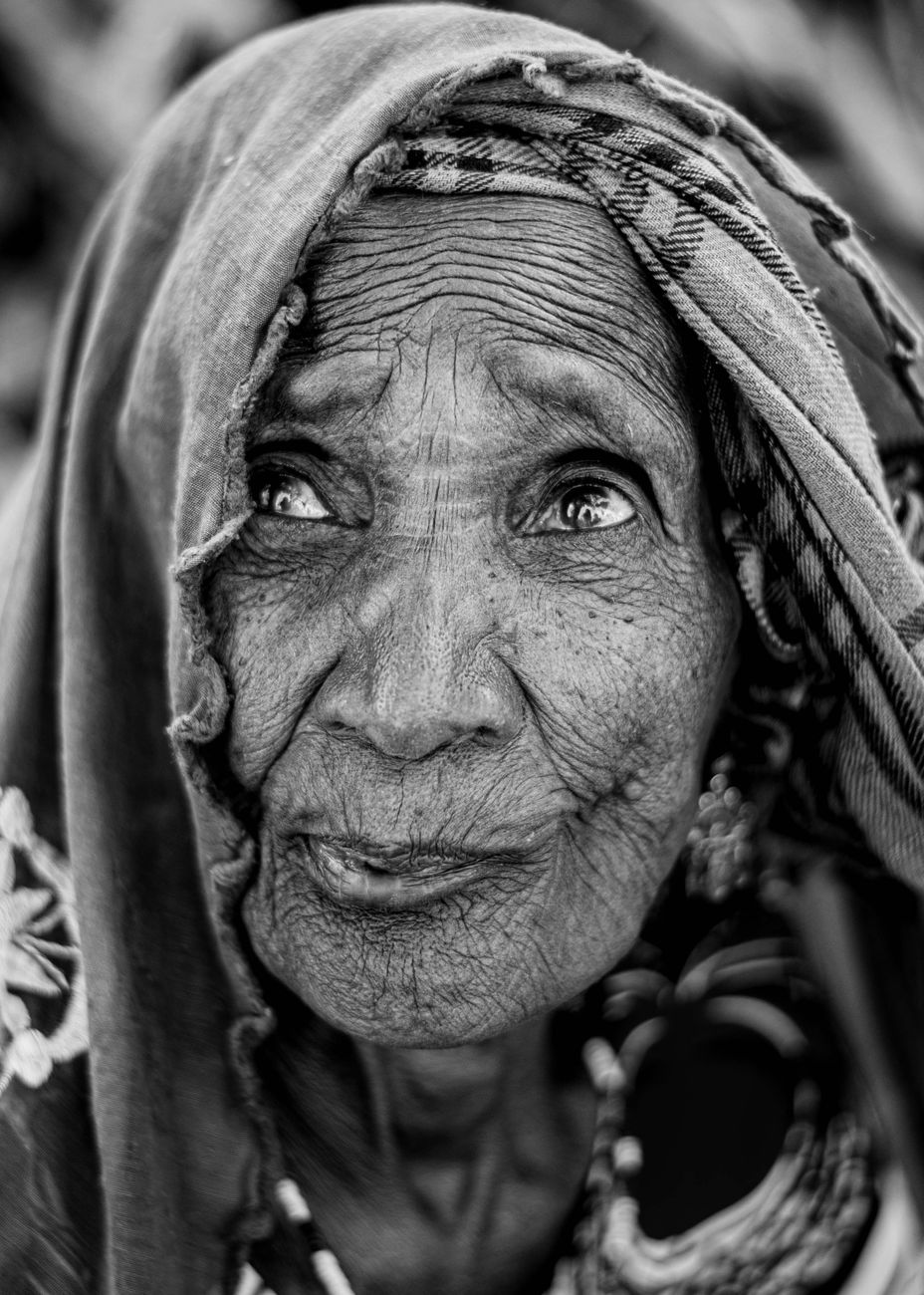
But I want to move beyond the language of reports for a moment and walk, imaginatively, beside an old woman returning to the airstrip decades later. She walks slowly because her body has become a history book. Every wrinkle is a paragraph. Every silence is punctuation. She does not need a monument to tell her where she is. The ground knows. The wind knows. Her memory knows. Perhaps she stands there and closes her eyes. Perhaps she remembers a young man who once promised to return before sunset. Perhaps she remembers the sound of his footsteps. Perhaps she remembers believing that governments existed to protect people like her. And perhaps, after all these years, the most painful sentence she could speak would not be “he died.” It would be: “the country took too long to hear me.”
This is why Wagalla belongs not only to Kenya but to the moral history of the world. Every country has its forgotten places. Every continent has families who discovered that citizenship can become fragile when power decides that certain lives matter less than others. From the killing fields of history to the prisons of forgotten regimes, humanity repeatedly demonstrates its capacity to turn neighbours into categories, citizens into suspects, and human beings into numbers. Wagalla therefore asks a question that reaches beyond Wajir:
How many forgotten people must suffer before a nation decides that remembering is a form of justice?
The answer should be none.
We should teach Wagalla not to cultivate hatred, but to cultivate vigilance. We should remember it not to imprison Kenya inside its past, but to prevent the past from becoming a blueprint for the future. A nation is not weakened by admitting that it has sinned. A nation becomes stronger when it possesses the courage to look into the mirror without breaking the mirror. No society becomes perfect by remembering, but societies that remember gain something precious: an early warning system against the return of darkness.
Kenya too must remember.
A nation is not weakened by admitting that it has sinned. A nation becomes stronger when it possesses the courage to look into the mirror … societies that remember gain something precious: an early warning system against the return of darkness.
And perhaps the most beautiful monument to the people of Wagalla would not be a stone building. Perhaps it would be a generation of Kenyan children who learn that a Somali Kenyan life is neither northern nor peripheral nor expendable, but Kenyan in the same complete and indivisible sense as every other Kenyan life. Perhaps justice begins when a child in Nairobi learns the history of Wajir and feels that the dead there belong to the child’s own national family. Perhaps it begins when a classroom in Machakos speaks about Wagalla and a classroom in Wajir speaks about the suffering of other Kenyan communities, until the map of Kenya stops being a collection of ethnic territories in our imagination and becomes what it ought always to have been: one human home.
Because the deepest tragedy of Wagalla is not merely that people were killed. It is that a country capable of producing poets, teachers, doctors, farmers, musicians, mothers, fathers and dreamers allowed some of its own citizens to become almost invisible in the national story. The dead deserved more than silence. The survivors deserved more than suspicion. The children deserved more than inherited grief. And the future deserves more than another generation growing up without knowing what happened.
[A] country capable of producing poets, teachers, doctors, farmers, musicians, mothers, fathers and dreamers allowed some of its own citizens to become almost invisible in the national story. The dead deserved more than silence. The survivors deserved more than suspicion.
So let the desert speak.
Let it speak in the language of mothers who waited.
Let it speak through the names of the dead.
Let it speak through the survivors who carried unbearable memories into old age.
Let it speak through every Kenyan who believes that justice must cross [lines of] ethnicity, geography, religion and political allegiance.
Let Wagalla become not a weapon against one community or another, but a candle held against the darkness of forgetting.
And when the wind rises over that old airstrip, let nobody call it merely wind.
Perhaps it is memory.
Perhaps it is history breathing.
Perhaps it is the dead asking the living for one final thing—not revenge, but remembrance.
For nations are not judged only by the monuments they build for their heroes. They are judged by whether they are brave enough to remember the people they once failed.
And if Kenya is ever to tell its complete story to the world, then Wagalla must have a chapter.
Not at the bottom.
Not in a footnote.
Not whispered behind closed doors.
But in the centre of the national conscience, where every Kenyan story ought to meet:
the place where a human life becomes more important than power, where truth becomes stronger than silence, and where memory finally refuses to die.
Words © Benjamin Munyao David 2026
Photo by Sadam Isah on Pexels.com


Leave a Reply