An article by Anowar Sadak
I was not born a refugee. I was born in Dhonkhali village, Maungdaw Township, Arakan State, Myanmar. Like every child, I grew up with dreams. I believed that if I studied hard, respected my parents, and treated others with kindness, I could build a meaningful future. I never imagined that one day I would lose my home, my country, and even my nationality.
Today, I live in the Rohingya refugee camps in Cox’s Bazar, Bangladesh. For many people around the world, the word “Rohingya” immediately brings images of overcrowded camps, humanitarian aid, violence, and suffering. Those images are real, but they are not our whole story. Behind every shelter made of bamboo and tarpaulin is a family with hopes, talents, memories, and dreams that refuse to disappear.
I write this article because I want people to see us not only as victims of one of the world’s most prolonged humanitarian crises, but also as people capable of contributing to a better future.
When I was forced to flee Myanmar in 2017, I left behind more than my home. I left behind my childhood, my education, my friends, and the place where my family had lived for generations. I crossed into Bangladesh carrying fear, uncertainty, and grief. Like hundreds of thousands of other Rohingya, I arrived with almost nothing except the determination to survive.
Life in a refugee camp is difficult in ways that are hard to explain. Every day is shaped by restrictions, uncertainty, and limited opportunities. Heavy rains threaten our shelters. Landslides destroy homes. Fires spread quickly through crowded camps. Access to higher education, formal employment, and freedom of movement remains extremely limited. Many young people spend years waiting for opportunities that never arrive.
Yet even in these conditions, hope survives.
I have seen parents sacrifice everything so their children can continue learning. I have seen young people teach English, mathematics, and computer skills to other refugees without receiving any salary. I have seen volunteers helping elderly people during floods and distributing food after disasters. I have seen women supporting one another through education and community work despite enormous challenges.
These acts may seem small, but together they represent something powerful. They show that refugees are not simply waiting for help. We are already helping each other and trying to build stronger communities.
I believe education is one of the strongest foundations for peace. A child who receives an education gains more than knowledge. They gain confidence, critical thinking, dignity, and hope. Education allows people to imagine a future beyond conflict and displacement.
Unfortunately, millions of displaced children around the world continue to face barriers to quality education. For the Rohingya community, these barriers are especially severe. Without meaningful educational opportunities, an entire generation risks being left behind.
The world often discusses refugees as beneficiaries of humanitarian assistance. While humanitarian support saves lives, it should not define our identity forever. Refugees should also be recognised as teachers, researchers, artists, entrepreneurs, health workers, environmental advocates, and community leaders.
Our experiences give us valuable knowledge about resilience, adaptation, and survival. We understand the consequences of discrimination, statelessness, and exclusion because we have lived through them. Our voices deserve a place in conversations about peacebuilding, climate action, education, and sustainable development.
The challenges facing the world today are interconnected. Climate change, conflict, poverty, and forced displacement cannot be solved separately. Refugee communities often experience these crises simultaneously. In Cox’s Bazar, heavy monsoon rains, floods, landslides, and environmental degradation affect both refugees and the surrounding host communities.
Building a sustainable future therefore requires cooperation rather than division. Refugees and host communities can work together to protect forests, improve waste management, expand educational opportunities, and strengthen community resilience. Solutions become stronger when everyone participates.
One of the greatest harms caused by statelessness is the loss of identity. When people are denied citizenship, they are often denied the chance to fully participate in society. Yet human dignity does not come from a passport alone. Every person has value simply because they are human.
I dream of a future where the Rohingya can return to Myanmar voluntarily, safely, and with full citizenship, equal rights, justice, and security. I hope for a future where no child grows up fearing persecution because of their ethnicity or religion.
Until that day arrives, I will continue writing. Writing has become my way of preserving memory, sharing truth, and inspiring hope. Every poem, article, and story reminds the world that our community is still here. We have not given up.
I do not ask people to feel sorry for us. Instead, I ask them to stand with us. Listen to our voices. Include us in decisions that affect our lives. Invest in our education. Support our dreams. Recognise our potential.
The future cannot be built by leaving millions of displaced people behind. It can only be built through justice, compassion, inclusion, and shared responsibility.
The Rohingya are more than survivors. We are human beings with ideas, skills, determination, and hope. If the world chooses to see us as partners rather than problems, we can help build a future that is more peaceful, more sustainable, and more humane for everyone.
The future grows when every person is given the opportunity to learn, contribute, and live with dignity. I still believe that future is possible, and I hope the world will choose to build it together.
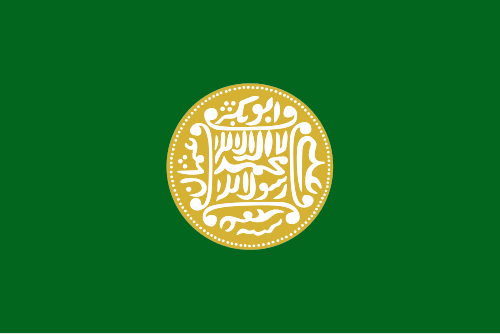
Image of Rohingya ethnic flag is from Wiki Commons


Leave a comment